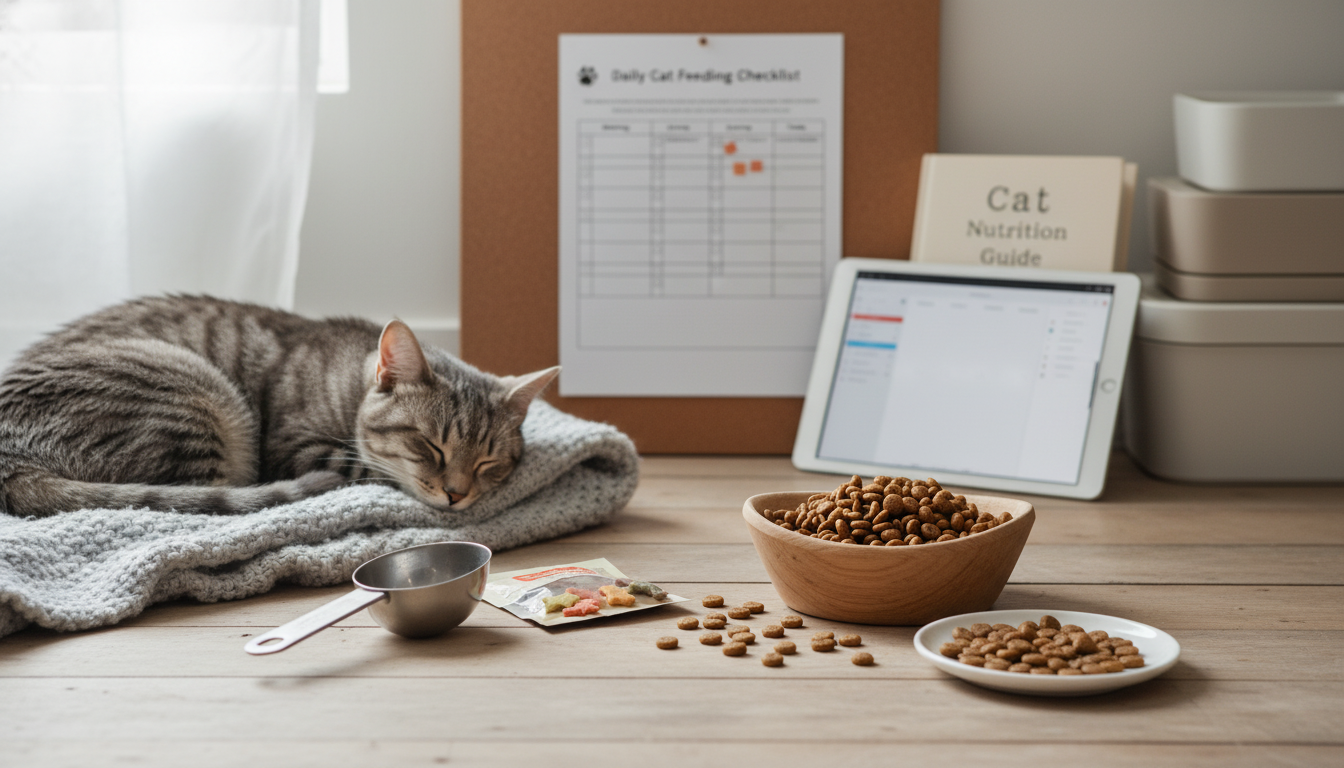
Start with your cat’s body condition, not the label on the bag. You’re likely feeding enough when your cat maintains a steady, healthy weight, has consistent energy, and you can feel the ribs with light pressure (but they’re not visibly sticking out). From above, your cat should have a noticeable waist behind the ribs; from the side, the belly shouldn’t hang low unless your vet has said it’s normal for your cat’s build.
Hunger signals can be misleading. Vocalizing, begging, or “acting starving” often reflects habit, boredom, or a learned routine—especially if treats show up when your cat asks. A better clue is trend data: weigh your cat regularly (or at least monthly) and watch for gradual loss, a dull coat, or reduced activity, which can point to underfeeding or a medical issue.
Portion guidance matters, but it must match the food type and your cat’s lifestyle. Wet food is often lower in calories per ounce than kibble, and free-pouring dry food can quietly add up. If your cat finishes meals instantly, that doesn’t automatically mean you’re underfeeding; consider dividing the daily amount into smaller meals or using puzzle feeders to slow intake and reduce food anxiety.
Treats can also throw off the balance. If you’re generous with treats, the “right” meal portion may be smaller than you expect. As a simple guardrail, keep treats limited and account for them in the day’s calories so your cat’s main diet stays complete and consistent.
For a practical way to check portions, timing, and treat limits in one place, see the full guide: Daily Cat Feeding Checklist: Portions, Treats & Timing.
Most adult cats do well with 2 measured meals per day, while kittens typically need 3–4 smaller meals. If your cat begs between meals, splitting the same daily portion into more feedings can help without increasing calories.







Leave a comment