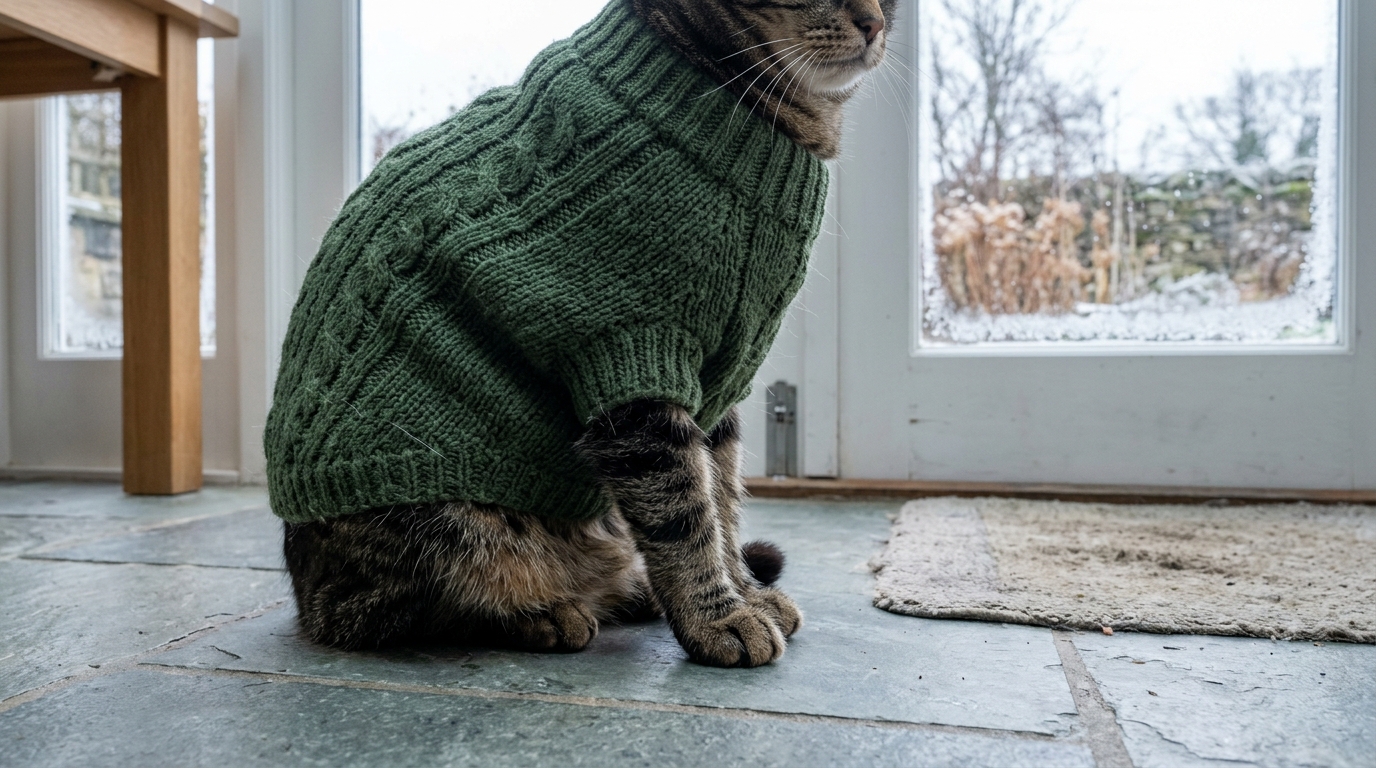
Sometimes, yes—but only if your cat actually needs the extra warmth and will tolerate wearing it safely. Most healthy adult cats with normal coats do fine indoors without clothing, even in winter. A sweater can be helpful for short-haired breeds, seniors, cats with thin coats, or cats that get chilly in drafty homes (especially if they seek heat sources, curl tightly, or shiver).
If your home stays comfortably heated and your cat acts normal, a sweater is usually optional. If you do choose one, prioritize comfort and safety over style: the sweater should be snug enough to stay in place but not tight, allow full shoulder movement, and never restrict breathing or swallowing.
Consider a sweater if your cat spends time in cooler areas (basements, enclosed porches), recently had a shave or medical procedure, or seems cold even with warm bedding. Skip it if your cat is overweight (often runs warmer), has a thick undercoat, or shows signs of stress when handled.
Start with short, supervised sessions so your cat can adjust. Watch for freezing, hiding, swatting, flattened ears, or low crouching—signs it’s not worth forcing. Remove the sweater if it twists, rides up toward the neck, bunches under the armpits, or gets damp. Never leave a sweater on unsupervised if your cat could snag it on furniture or if there are loose threads, dangling strings, or tight armholes.
For practical guidance on fit, materials, and care, see this helpful guide: pet sweater fit and care for cats (and small dogs).
For Cat Sweater in Winter: When It Helps (and When Not), the best answer depends on fit, material, care instructions, and how the product will be used day to day.
Look for shivering, cold ears or paws, seeking constant heat, or curling up unusually tight. If your cat is lethargic or seems unwell, contact a veterinarian rather than relying on clothing for warmth.






Leave a comment