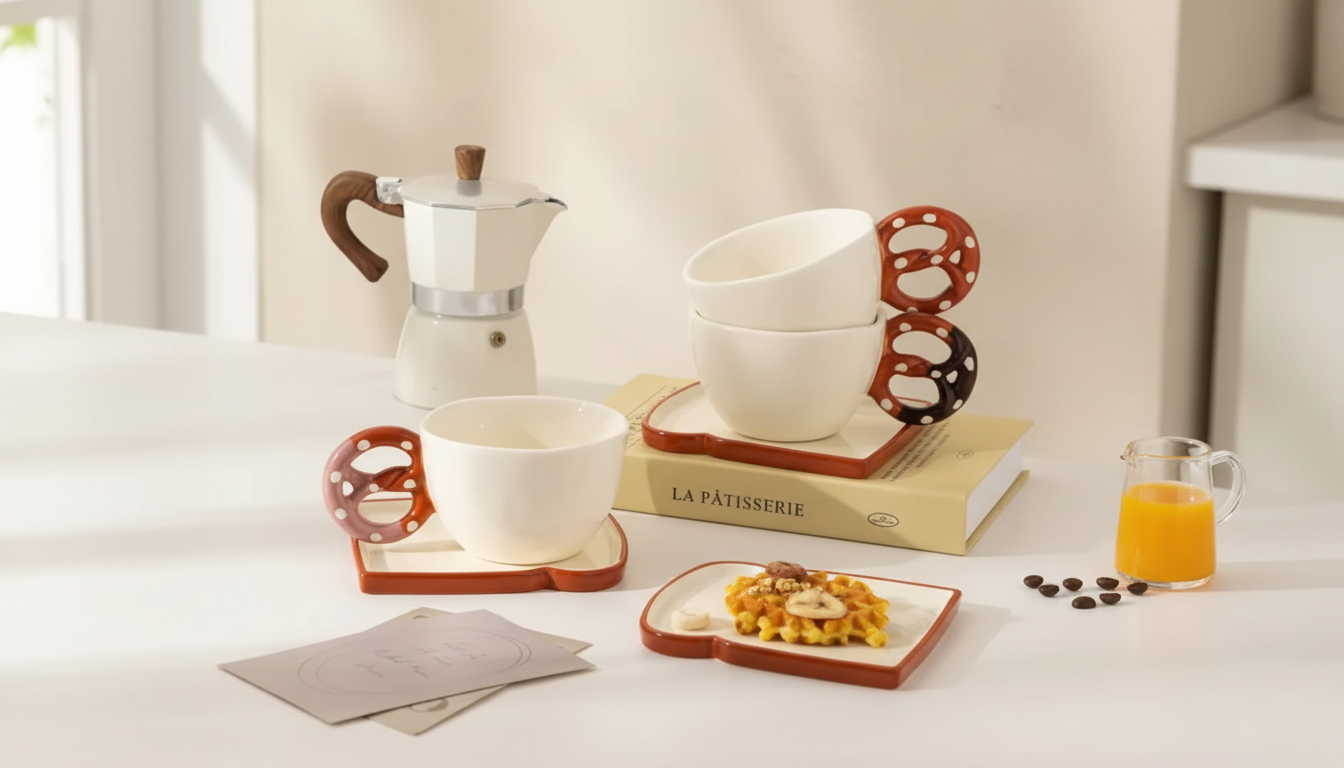
“Breakfast cup” and “tea cup” aren’t fixed sizes everywhere, but in everyday U.S. use they usually refer to two different serving ranges. A breakfast cup is typically the larger option—often closer to a mug size—while a tea cup is smaller and designed for lighter pours.
A breakfast cup commonly holds about 12 to 16 fl oz (roughly 350 to 475 mL). That extra capacity makes it practical for a bigger morning drink—think a generous coffee with milk, a latte-style pour, or even hot cocoa—without constant refills. Many modern “breakfast cups” look like wide, bowl-shaped cups with a handle and may be paired with a saucer.
A traditional tea cup is usually around 6 to 8 fl oz (about 180 to 240 mL). This size works well for sipping while the tea stays hot and for serving multiple rounds. Some modern café-style tea cups go a bit larger, but they’re still generally smaller than what’s labeled a breakfast cup.
If the goal is a longer, milk-forward drink (or simply fewer refills), a breakfast cup is the better fit. If serving tea in a more classic way—smaller pours, hotter sips, and room for a saucer and spoon—a tea cup size feels more natural. For a clear real-world reference point, a 350 mL (about 12 oz) cup-and-saucer set sits squarely in breakfast-cup territory; see the sizing details here: https://exelline.com/guide-350ml-ceramic-mug-and-saucer-set-coffee-tea/.
For Breakfast Cup vs Tea Cup Size: Ounces & mL Guide, the best answer depends on fit, material, care instructions, and how the product will be used day to day.
Most cappuccino cups are about 5 to 6 fl oz (150 to 180 mL). That size leaves room for espresso plus a thick layer of milk foam without overflowing.





Leave a comment