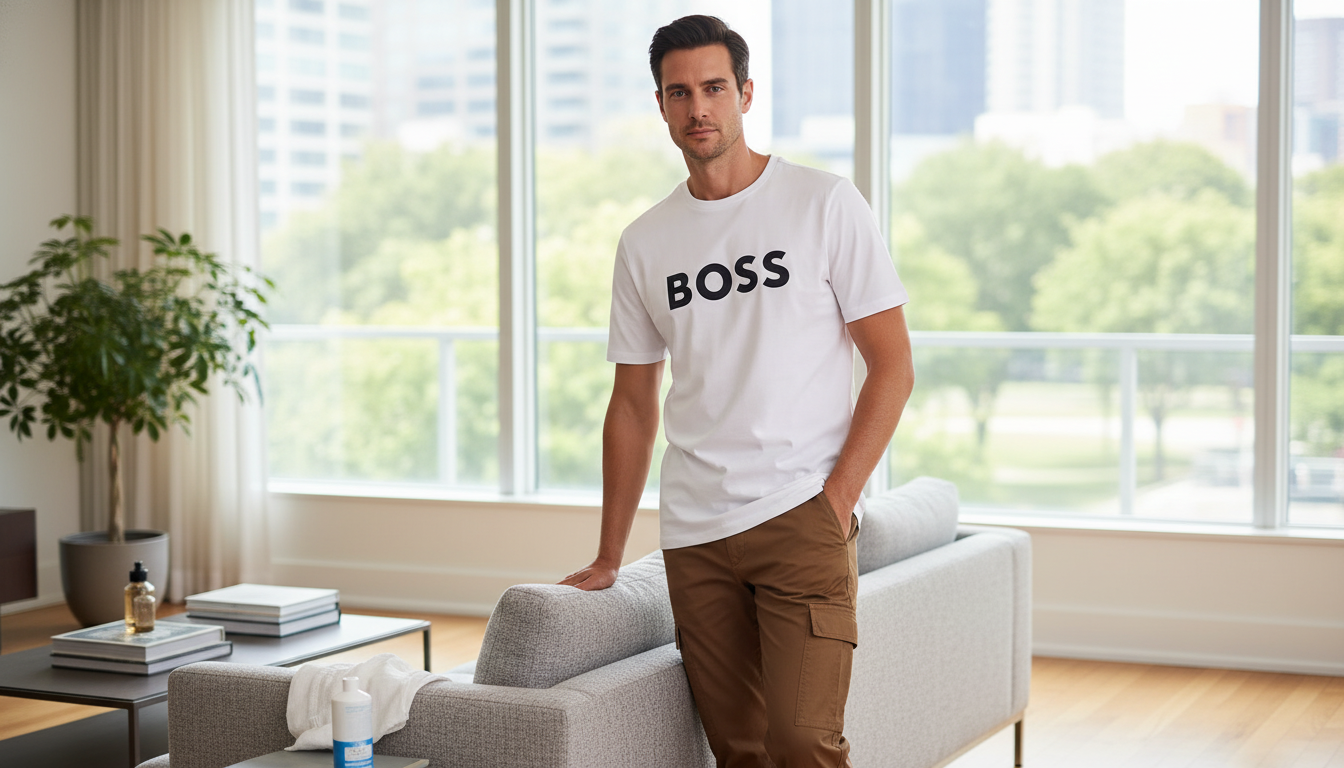
Boss shirts often cost more because you’re paying for a blend of brand positioning, fabric quality, construction details, and the behind-the-scenes costs of designing and distributing a globally recognized label. While two tees can look similar on a hanger, the differences show up in how the fabric feels, how seams hold up, and how the fit stays consistent after repeated washes.
Many Boss shirts use better cotton, tighter knits, and more reliable dye and print processes than budget alternatives. Premium blanks and cleaner finishing can mean less pilling, better color retention, and a smoother hand feel—details that raise manufacturing costs.
Cost isn’t just fabric. Pattern-making, consistent sizing, reinforced stitching, and quality control add time and labor. Even small upgrades—like stronger collars, cleaner seam work, and better shaping—can increase the final price noticeably.
Boss operates as a designer brand with a long-standing reputation. Part of the price reflects brand equity, marketing, seasonal design work, and retail presentation. That “label value” is real in the market, even if it’s not a tangible material on the shirt.
Luxury-leaning brands frequently sell through curated retail channels with higher overhead: store staffing, returns handling, packaging, and stricter inventory standards. Those costs are typically built into the MSRP.
Check fabric weight and softness, look at stitching consistency, and read care instructions—then compare it to how often you’ll wear it. If you want inspiration for styling a clean graphic look, see the guide here: https://exelline.com/guide-boss-mens-white-printed-t-shirt-clean-graphic-tee/.
Look for a smooth, substantial fabric, tight stitching with no loose threads, and a print that feels integrated rather than rubbery or cracking. A good tee should keep its shape at the collar and seams after washing.



Leave a comment