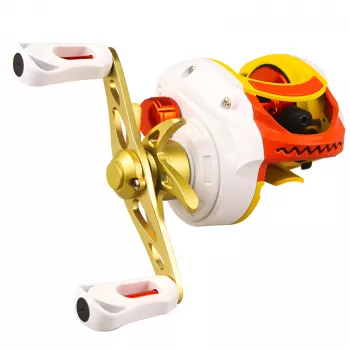
Ultra Smooth 7.2:1 High Speed Baitcasting Reel: fast control with clean line management
When you want quick lure control without a finicky, temperamental feel, a 7.2:1 baitcaster sits in a practical sweet spot. Our team built this approach around two priorities you’ll notice immediately on the water: fast line pickup for slack-line moments and an ultra-smooth rotation that keeps retrieves steady across common bass-style techniques. Add the metal line cup for confident spooling and stable line lay, and you’ve got a reel that’s ready for repeated casts, tight hooksets, and day-long use.
What this reel is built to do
- Keeps fast-moving lures on tempo: a 7.2:1 gear ratio supports quick line pickup for burning, skipping, and making repeated casts.
- Stays composed under pressure: smooth rotation helps maintain steady retrieves and reduces fatigue during high-cadence fishing.
- Improves spooling confidence: a metal line cup supports stable line lay and helps reduce a “soft” spool feel when packing line tightly.
- Fits the versatile middle ground: high-speed without being so extreme that slower techniques become awkward.
7.2:1 gear ratio: when speed matters most
A high-speed reel earns its keep when your presentation creates slack. That slack can hide bites, delay hooksets, and make it harder to keep fish out of cover. A 7.2:1 ratio helps you recover line quickly so your rod work translates into better control.
- Rapid line recovery: quickly takes up slack after a twitch, hop, or quick direction change—useful for jigs, worms, and jerk-style retrieves.
- Efficient follow-up casts: high-speed reels shine when covering water and firing repeated casts along banks, grass edges, docks, or laydowns.
- Better control around cover: faster pickup helps steer fish away from snags once they bite and turn.
- Rule of thumb: choose high speed when the lure or situation creates slack line (bottom contact, rod-tip action, target fishing).
Ultra-smooth performance: what “smooth” changes on the water
Smoothness isn’t just a comfort feature; it’s a consistency feature. When rotation starts evenly and stays steady, you can repeat the same casting rhythm and retrieve cadence without fighting the reel. That matters when you’re dialing in depth, trying to keep blades thumping just right, or working a bait through scattered cover.
- Cleaner retrieves: a smooth reel helps maintain consistent lure action at multiple speeds, especially when working blades or swimming soft plastics.
- More precise casting rhythm: even startup and rotation make it easier to repeat casts and thumb control shot after shot.
- Reduced fatigue: smoother operation typically feels lighter over a long day of casting, even with heavier baits.
- Practical expectation: smoothness is protected by proper spool tension, brake tuning, clean line, and routine maintenance.
Why the metal line cup matters
Line management is where “easy” reels separate themselves from reels that constantly need correction. A rigid metal line cup supports stable spooling and even line lay—especially helpful when you spool under firm tension (as you should with baitcasters).
- Stable spooling: a rigid metal cup helps keep the spool’s shape consistent under tightly packed line, supporting even line lay.
- Confidence with braided lines: braid can be packed very tight; a solid spool feel makes it easier to maintain consistent tension during spooling.
- Improved durability in everyday use: metal spool components are commonly chosen for longevity when reels see frequent casting and hard hooksets.
- Best practice: spool with firm, steady tension and avoid overfilling to help minimize backlashes.
Best pairings: techniques that match a high-speed baitcaster
Quick setup for cleaner casts (especially on day one)
Baitcasting setup checklist (fast, reliable baseline)
| Step |
What to do |
What you’re aiming for |
| Spool fill |
Leave a small gap below the spool lip |
Fewer overruns; more predictable casting |
| Spool tension |
Remove side play; fine-tune for lure weight |
Controlled drop without sudden overrun |
| Brake level |
Start higher, then reduce in small steps |
Balance distance with consistency |
| Casting finish |
Thumb the spool before splashdown |
Tighter line and fewer backlashes |
| Line management |
Retie when abraded; keep tension on retrieve |
Smoother casting and better hooksets |
Care that keeps a smooth reel feeling smooth
Recommended gear from our store
Helpful references (for technique and trip planning)
FAQ
Is a 7.2:1 baitcasting reel a good all-around speed?
Yes—7.2:1 is a versatile “do-most-things” speed that excels when your technique creates slack line, such as jigs, worms, topwater, and target casting. If you mostly slow-roll crankbaits all day, a lower ratio can feel easier to maintain, but many anglers happily run a 7.x reel as their primary setup.
Does a metal line cup change casting performance?
It can help indirectly by supporting stable spooling and consistent line lay, especially when you pack line under firm tension or use braid. Casting performance still depends heavily on correct spool fill, spool tension, brake settings, and matching lure weight to your rod and reel.
What’s the fastest way to reduce backlashes on a new baitcaster?
Start with the brakes set slightly higher, set spool tension so your lure drops smoothly without overrunning, and avoid overfilling the spool. Use a smooth casting motion, thumb the spool just before the lure lands, and practice with a consistent lure weight until your timing becomes automatic.
Recommended for you




Leave a comment