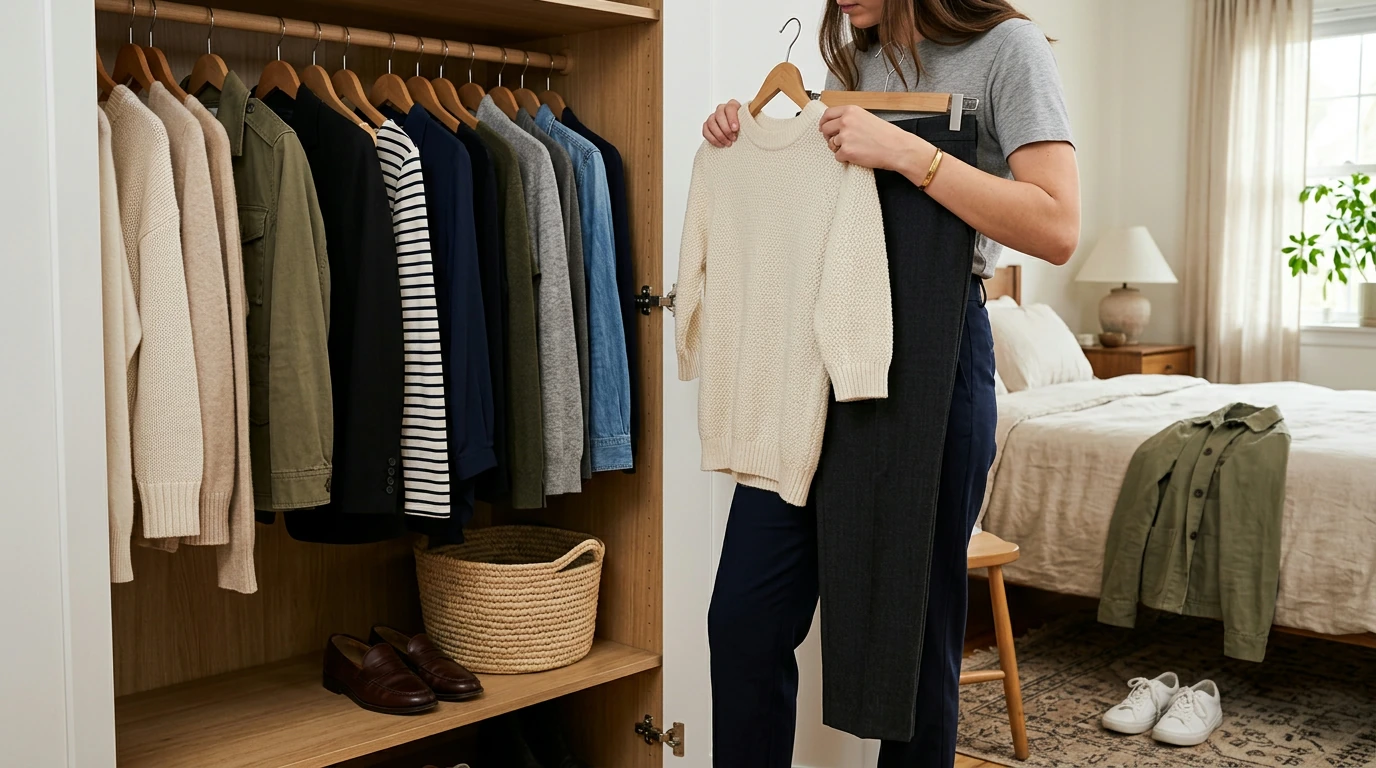
A capsule wardrobe works best when it removes daily outfit stress without making style feel restricted. The goal is a small set of pieces that fit, flatter, and combine easily—so getting dressed is faster, shopping is more intentional, and every item earns its space. Our team uses a checklist mindset and a focus on outfits (not just items) so you end up with repeatable combinations you actually want to wear.
A capsule wardrobe is a tightly edited closet where most pieces mix and match across multiple outfits. The win isn’t a magic number—it’s fewer “nothing to wear” moments because your closet is built around compatible colors, silhouettes, and layers.
Before you touch hangers, decide what your capsule needs to do for your real week. When you build around outcomes, you avoid the classic mistake of creating a “pretty” capsule that collapses on Monday morning.
| Decision | Simple choice | Why it matters |
|---|---|---|
| Primary lifestyle | Work / casual / hybrid | Determines the balance of polished vs. relaxed pieces |
| Laundry cadence | Weekly / biweekly | Controls how many basics are truly needed |
| Color approach | Neutral base + 1–2 accents | Maximizes combinations without feeling boring |
| Silhouette comfort | Fitted / straight / oversized mix | Prevents building a closet that looks good but won’t be worn |
| Shoe strategy | 2–4 core pairs | Shoes often limit outfit options more than tops do |
Editing first protects your budget and keeps your capsule personal (not aspirational). We recommend a quick try-on session so you’re choosing based on how items feel and function, not just how they look on a hanger.
Once you’ve identified what already works, use a simple formula to fill gaps without overbuying. Think in categories that create outfits, not categories that look complete on paper.
If you want a step-by-step framework you can reuse each season, we keep it straightforward with a guided process and checklists. Our in-stock digital guides are designed to help you make decisions faster without overhauling your personal style.
Keeping and wearing clothes longer can also reduce textile waste—resources like the U.S. EPA’s textile waste data and the Ellen MacArthur Foundation’s circular economy work in fashion highlight why intentional closets matter beyond convenience.
A flexible range (often 25–45 for daily wear) works better than a fixed number because lifestyle, laundry cadence, and climate matter more. Start with a 1–2 week mini capsule, then add only if you consistently run out of essentials.
It can, but many people keep the capsule focused on daily outfits and treat gym, sleep, and uniform-like items as separate functional categories. Even if you separate them, keep those categories edited so they don’t overwhelm your space.
Add variety through accessories, a statement layer, texture, and a seasonal swap or two—without expanding your closet dramatically. Use the 3-outfit rule so any new piece increases combinations instead of creating more clutter.





Leave a comment