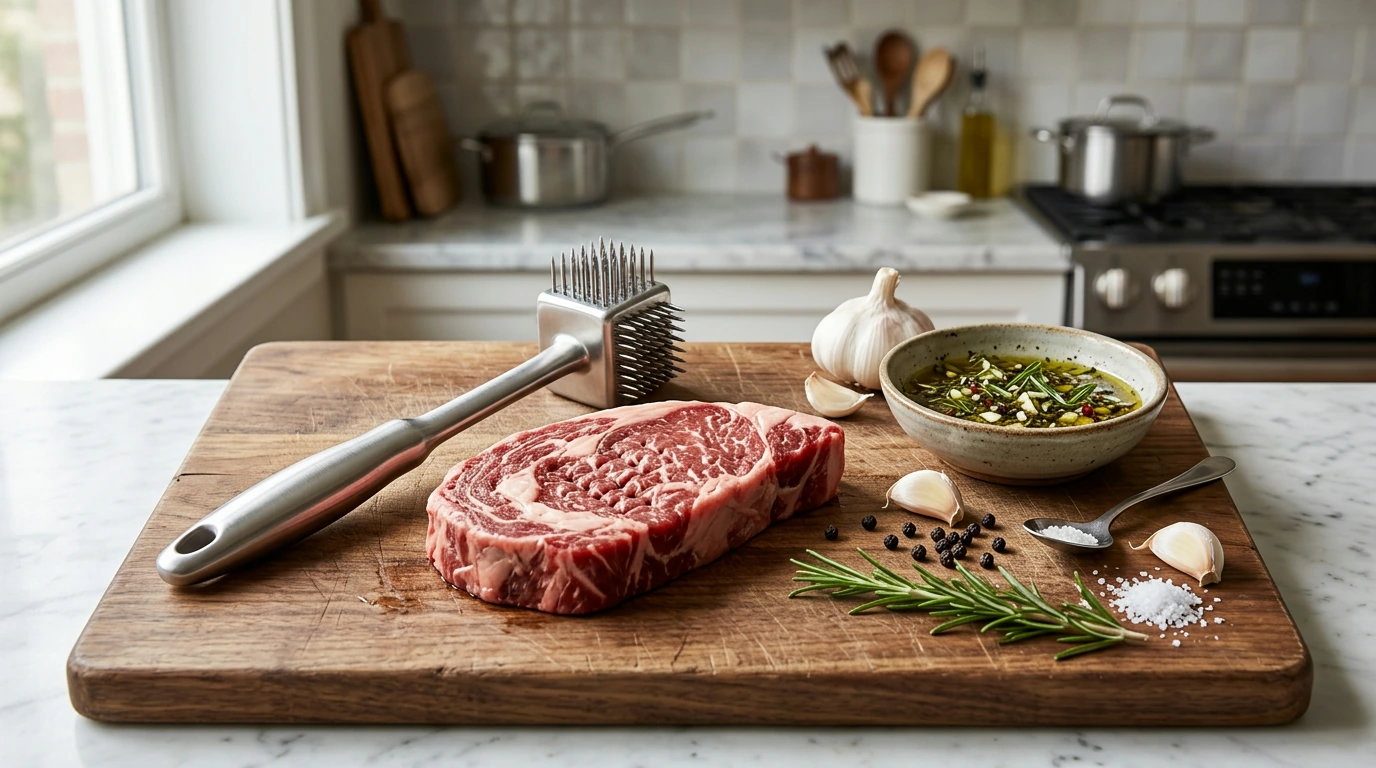
A needle-style tenderizer hammer helps turn tougher cuts into more tender, flavorful meals by creating tiny channels that let seasoning and marinades penetrate deeper while reducing chewiness. Unlike pounding with a traditional mallet, a needle hammer focuses on fiber disruption and better flavor travel while helping you keep the cut’s original shape. Below is a practical guide to how a stainless steel needle hammer works, what to look for in a durable model, and safe, realistic ways to use and clean it at home.
A needle tenderizer hammer uses multiple metal needles to puncture the meat in a uniform pattern. Those small punctures can make a noticeable difference in both texture and how quickly a marinade works—especially on thicker cuts.
When a tool repeatedly contacts raw meat, marinades, and hot wash water, the material matters. A 304 stainless steel build is a practical upgrade for durability and sanitation.
| Tool type | Best for | Main effect | Texture risk | Cleanup notes |
|---|---|---|---|---|
| Needle tenderizer hammer | Steaks, chops, cutlets, thicker portions | Punctures + fiber breakdown, faster marinade penetration | Low–medium (overuse can make edges ragged) | Needs careful scrubbing around needles; sanitize well |
| Flat meat mallet | Cutlets, schnitzel, flattening for even cooking | Thinning + some fiber disruption | Medium (can make meat mushy if over-pounded) | Easier to rinse; fewer crevices |
| Blade tenderizer (multi-blade) | Larger roasts, thicker steaks | Deeper cuts through fibers | Medium (can leave visible channels) | Blades require thorough cleaning and drying |
| Marinade only (no tool) | Naturally tender cuts, long marination | Surface flavor + gradual softening | Low (but can get mealy with very acidic marinades) | No tool cleanup; longer planning needed |
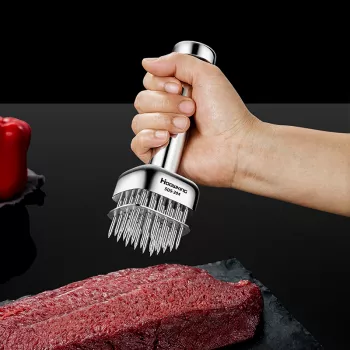
If you want a needle tenderizer designed for repeated kitchen use, the Premium 304 Stainless Steel Meat Tenderizer Needle Hammer offers stainless steel construction intended to resist rusting and staining while delivering consistent punctures. It’s a practical fit for steaks, pork chops, chicken cutlets, and meal-prep portions where even texture and faster seasoning penetration make a noticeable difference.
For grilling, camping, or tailgating where prep and cooking happen away from a full kitchen, a compact power option can help support lights, small appliances, or device charging. The Portable 200W Solar Generator with AC Outlet & USB Ports is an in-stock option for flexible outdoor setups.
For more detail on marinating safety and timing, this reference is useful: USDA FSIS — Marinating and Food Safety.
Needle tenderizing can move surface bacteria into the interior, so safe handling and thorough cooking are important. Prevent cross-contamination, clean the tool carefully, and cook to safe internal temperatures—especially for poultry.
Yes. Use lighter pressure to avoid tearing, focus on thicker areas for more even cooking, and be extra careful with cleanup and thorough cooking since chicken carries higher food-safety risk.
Many marinades work well in about 15–60 minutes after needle tenderizing, depending on thickness and ingredients. Acidic marinades generally need less time, while salt-forward or enzyme-based marinades may benefit from longer resting if the cut is thick.





Leave a comment