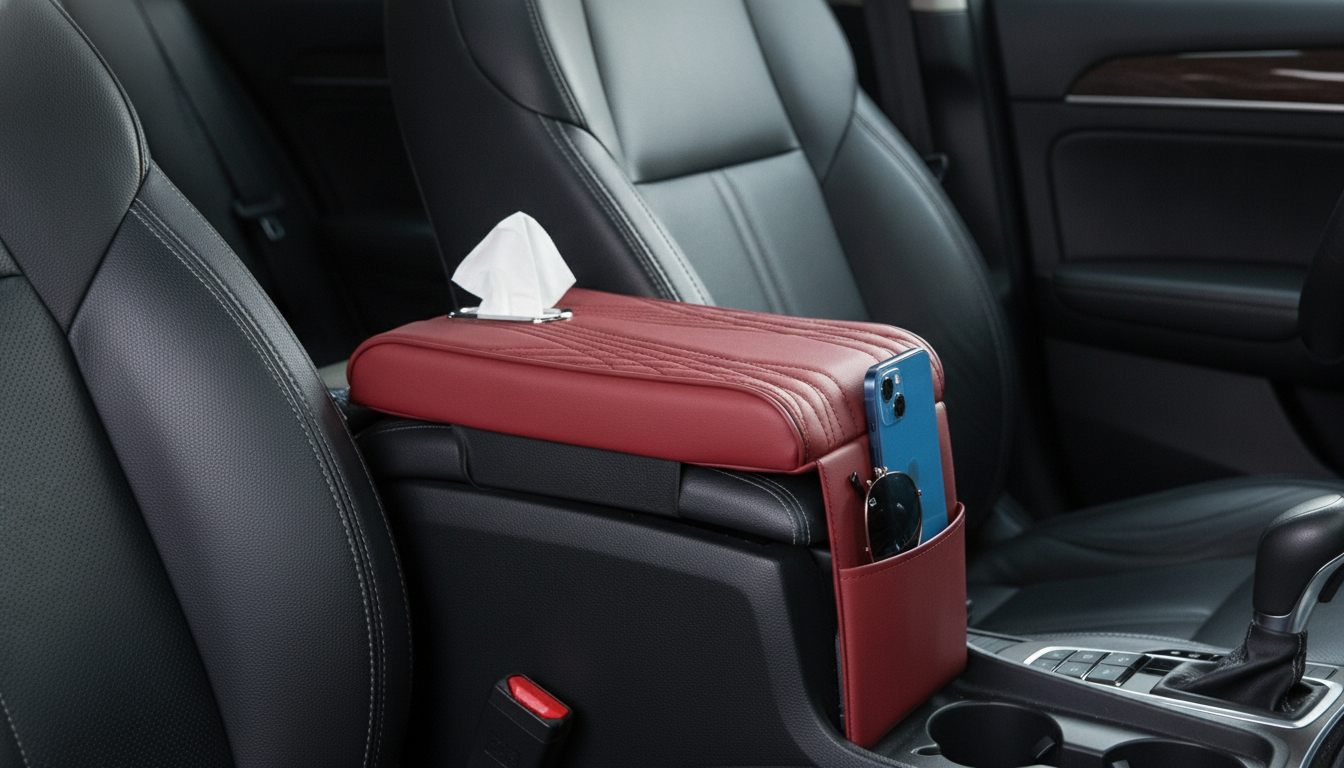
A center console takes constant wear from elbows, keys, phones, and daily spills. A protector that also adds a tissue holder and side storage helps keep the cabin cleaner, reduces scuffs on the console lid, and keeps small essentials within easy reach without turning the front seats into a clutter zone. For drivers who spend a lot of time on the road, this small upgrade can make the front row feel calmer, more comfortable, and easier to maintain.
The center console is one of the most frequently touched surfaces in the cabin, which is why it often develops shine, scratches, or worn spots long before the rest of the interior looks tired. A console protector provides a practical layer between daily life and the console lid.
If the console is a common “drop zone,” the added structure also makes it easier to keep a consistent routine: tissues in the holder, small daily items in the side pocket, and the top surface reserved for comfortable arm support.
This type of organizer-protector is most valuable when your front seats need to stay functional and uncluttered. It’s especially helpful when multiple people use the same vehicle and small items tend to migrate.
| Check | What to look for | Why it matters |
|---|---|---|
| Console lid size | Measure lid length/width and compare to protector footprint | Prevents overhang or sliding |
| Lid opening style | Hinged lid or sliding lid clearance | Avoids blocking the lid operation |
| Tissue pack type | Pocket tissues vs. small soft packs | Ensures smooth pull without tearing |
| Side storage needs | Keys/coins/receipts/charging cable | Keeps priority items from seat-gap loss |
Not all console protectors are built the same. A good one should feel stable, comfortable, and low-effort to live with—meaning it doesn’t shift around, doesn’t block controls, and doesn’t become another item to constantly adjust.
As a simple rule: prioritize stability and easy cleaning first, then comfort, then storage capacity. Overly large organizers can crowd the front row and become annoying on longer drives.
A few minutes of setup can prevent weeks of sliding, snagging tissues, or pockets rubbing against seats. Start with a clean surface so the protector can sit flat and grip properly.
Once it’s installed, take one drive and note any friction points (seat movement, buckle access, or lid operation). A small repositioning early usually solves it.
Console protectors are meant to take abuse, but they still look best with quick maintenance. A weekly wipe-down prevents oils and dust from becoming “set in,” especially around seams and the tissue opening.
For refreshing faded trim and keeping the surrounding surfaces consistent, consider Car Plastic & Leather Restorer – Back to Black Gloss Coating & Polish for periodic touch-ups after cleaning.
Convenient storage should reduce distraction, not create it. When tissues, receipts, and small items have a dedicated place, there’s less temptation to search between seats or rummage through bags while driving. For more on the risks of driver distraction, see guidance from NHTSA and the CDC.
For a simple, practical upgrade, see the Car Center Console Protector with Tissue Box and Side Storage—a compact way to add protection, comfort, and everyday organization without redesigning your whole cabin.
Fit depends on your console lid dimensions and how it opens. Measure the lid length and width, then confirm the protector won’t interfere with a hinged or sliding lid, seatbelt buckles, or seat adjustment controls.
Small soft packs and pocket tissue bundles typically dispense the cleanest with less tearing. Very large tissue boxes or bulky packs may shift in the holder and snag during pulling.
Start by cleaning the console lid so the organizer can grip a flat, dust-free surface. Use any non-slip backing or straps provided, place it squarely, and avoid loading the side pockets with heavy items that can cause shifting.






Leave a comment