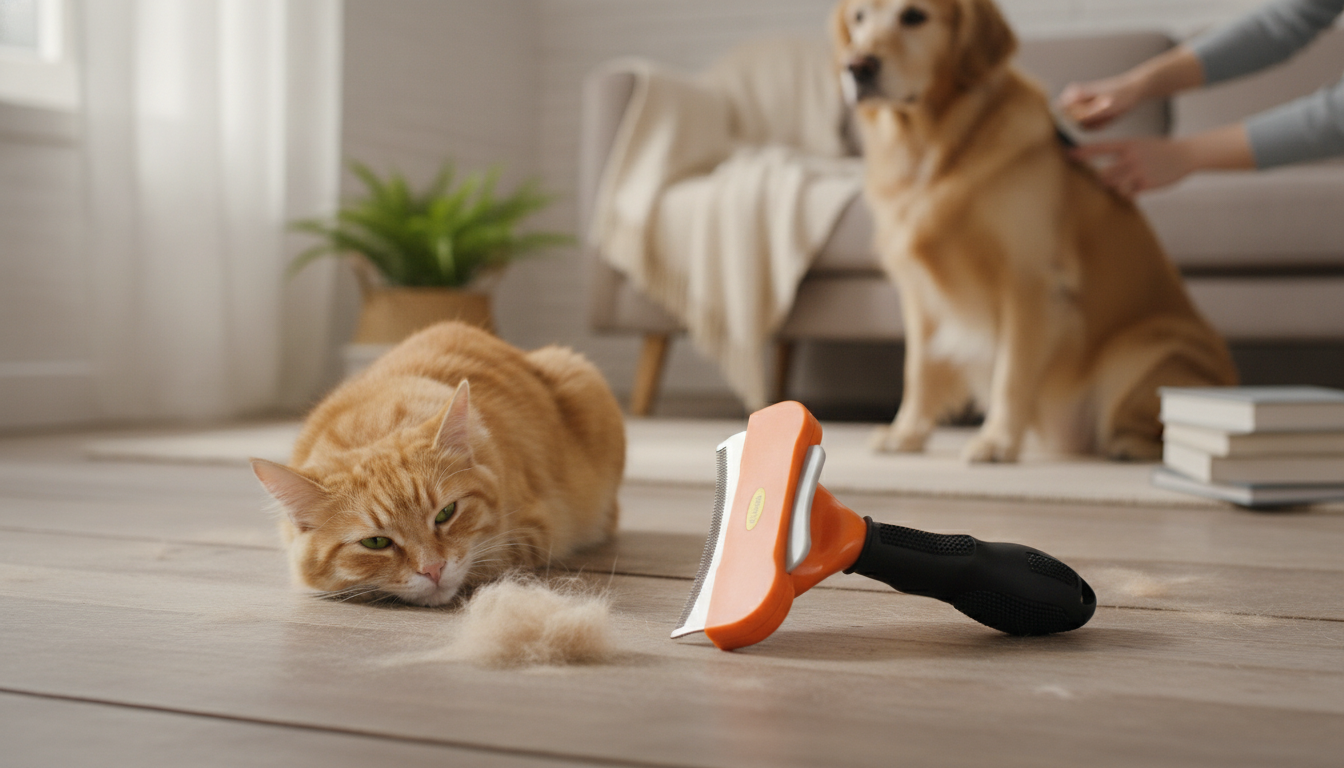
Seasonal shedding, undercoat buildup, and small tangles can quickly turn into fur on furniture and discomfort for pets. A well-designed deshedding brush helps lift loose hair before it mats, while staying gentle enough for regular grooming across many coat types. With a steady routine, many pets feel more comfortable, and cleanup around the house becomes noticeably easier.
Shedding isn’t just a “spring and fall” thing. Indoor temperature control, changes in daylight, and everyday stress can keep coats cycling throughout the year. As fur loosens, it doesn’t always fall away neatly—much of it stays trapped, especially in thicker coats.
For general grooming guidance, the American Kennel Club and the ASPCA’s cat grooming tips both emphasize routine coat care as a practical way to support skin and coat health.
A deshedding brush is meant to catch loose hair efficiently while keeping grooming comfortable. It’s especially helpful when your pet’s coat looks “fine” on top, but you keep finding tufts on the couch, blankets, and clothing.
If you notice significant itching, patchy hair loss, or sudden coat changes, a veterinary check is the safest next step.
The right brush can make grooming feel less like a chore and more like quick maintenance. The goal is to capture loose fur during short sessions, rather than chasing it around the house later.
If you’re ready to streamline regular coat care, you can find the Pet Deshedding Brush for Cats & Dogs – Removes Loose Hair & Tangles available now.
Coat type matters more than breed. A short-coated pet may only need quick touch-ups, while long coats and double coats benefit from more consistent sessions (especially in friction zones).
| Coat type | Primary goal | Typical frequency | Notes |
|---|---|---|---|
| Short (smooth) | Lift loose hair, reduce dander | 1–3x/week | Use light pressure; avoid over-brushing sensitive skin |
| Medium | Control shedding, prevent tangles | 2–4x/week | Work in sections; check behind ears and under collar |
| Long | Prevent mats, remove loose undercoat | 3–5x/week | Start with ends; avoid yanking through knots |
| Double coat | Manage undercoat during shedding | 2–5x/week (seasonal) | Stop if skin looks irritated; pair with a slicker or comb as needed |
Gentle technique is what keeps deshedding helpful instead of scratchy. Think “light and consistent,” not “hard and fast.”
For pets that get anxious during grooming, building calmer routines for the whole household can help. If you’re working on everyday stress and focus, Calm at Work: Smart Strategies to Manage Stress and Boost Focus is a simple add-on for pet parents juggling busy schedules.
Most short-coated pets do well with 1–3 short sessions per week, while medium/long coats and double coats may need 2–5 sessions weekly during heavy shedding seasons. Keep sessions brief and consistent, and reduce frequency if you see redness or sensitivity.
It can help separate minor tangles and lift loose undercoat before it compacts, but dense mats close to the skin often require a dedicated dematting tool or a professional groomer. Forcing a brush through mats can cause pain and skin injury.
Yes, as long as you use light pressure and avoid repeated passes over the same spot. Stop if the skin looks pink, your pet flinches, or the coat feels rough after brushing, and switch to shorter sessions.







Leave a comment