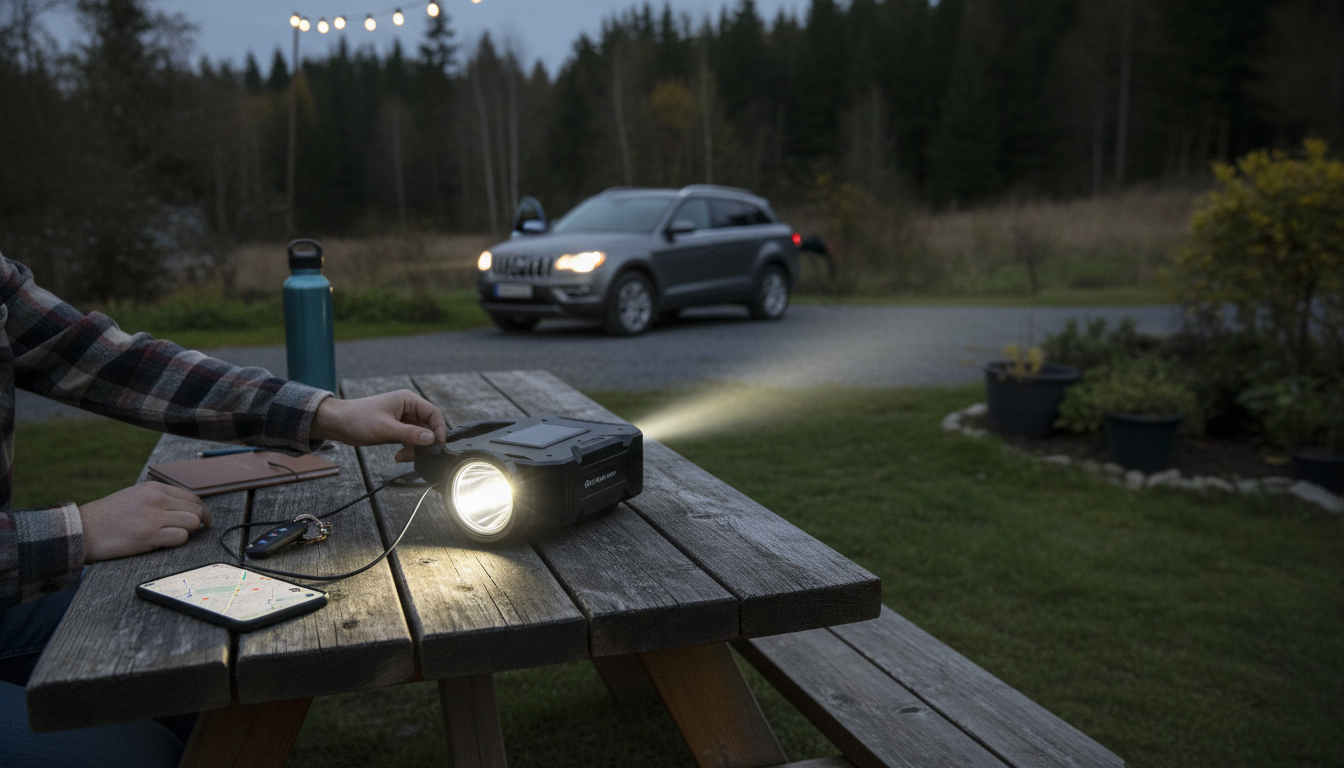
A dependable handheld searchlight can make late-night tasks, roadside stops, and power outages feel far more manageable. A dual light source design adds flexibility—use a focused beam for distance and a broader light for close-up work—while rechargeable power helps reduce ongoing battery costs. Whether it’s finding a breaker panel during a blackout or checking a tire shoulder-side, having the right beam for the moment is what turns a “nice-to-have” into a tool you reach for often.
Dual light source searchlights are built around a simple idea: one beam shape rarely fits every situation. A tight, long-throw spot beam is ideal for distance checks, while a wide-area flood (often a side light) is better for hands-on work nearby.
When comparing brightness claims, it helps to know some brands reference standardized testing. The ANSI/PLATO FL 1 standard explains common flashlight performance terms like runtime and beam distance in a consistent way: NEMA — ANSI/PLATO FL 1 Flashlight Basic Performance Standard.
A handheld rechargeable searchlight earns its keep in the “small emergencies” that happen all year long—when the power flickers, something rolls under the shed, or a roadside check turns into a longer stop than planned.
For storm season planning and outage basics, these guides are useful references: Ready.gov — Power Outages and American Red Cross — Power Outage Safety.
Two lights in one body is a great start, but day-to-day usability comes down to a handful of practical details. When a light is used with cold hands, while standing on gravel, or during a stressful moment, convenience matters.
Using the right beam at the right time makes the light feel brighter, last longer, and reduce glare—especially indoors or on reflective surfaces like white walls, painted metal, or road signs.
Rechargeable searchlights are most valuable when they’re actually ready. A few habits can help keep the battery healthier over time and reduce the odds of grabbing a dead light during an outage.
| What to compare | Why it matters | What to choose |
|---|---|---|
| Dual light source | One light rarely fits all situations | Spot + flood/side light for flexibility |
| Charging method | Determines how easy it is to top up | Use a common cable/power source when possible |
| Runtime behavior | High modes drain faster | Prefer lights with usable medium/low modes |
| Ergonomics | Reduces hand fatigue | Comfortable handle, stable base |
| Durability | Searchlights get dropped | Solid housing and basic splash resistance |
It typically means the searchlight offers two distinct lighting options—most often a focused spot beam for distance and a broader flood or side light for close-up tasks. This makes it easier to match the beam to what you’re doing instead of struggling with a beam that’s too narrow or too intense up close.
Runtime depends heavily on the brightness mode and the battery capacity. High output drains faster, while medium and low modes usually provide much longer usable runtime; topping up regularly helps ensure it’s ready when needed.
It can be stored in a car kit, but extreme heat and cold can reduce battery performance over time. Checking the charge periodically and avoiding prolonged storage in high-heat conditions helps maintain reliability.


Leave a comment