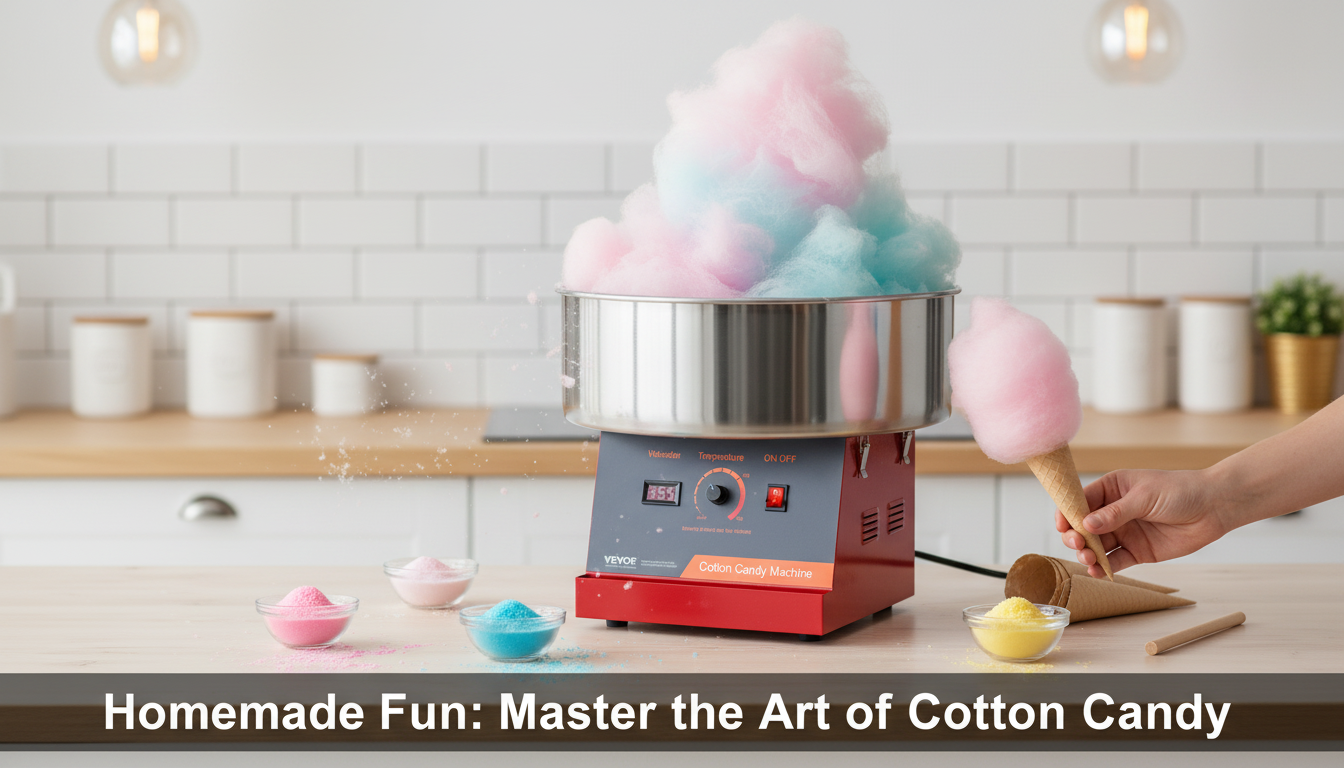
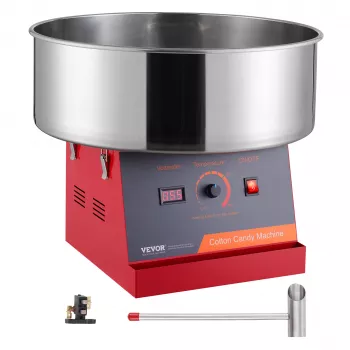
A countertop cotton candy maker turns regular sugar into fluffy, carnival-style cones in minutes. This electric model pairs a stainless steel bowl for durability and easier cleanup with an included sugar scoop for consistent portions—useful for parties, family nights, school events, and small-scale concession setups where speed and repeatable results matter.
If you’re setting up a treat station for a birthday or running quick servings at a fundraiser, the biggest difference between “a fun idea” and “smooth service” usually comes down to three things: stable heat, consistent portions, and easy cleanup. This machine is designed around those practical needs.
For convenient ordering, you can find the Electric Cotton Candy Machine with Stainless Steel Bowl and Sugar Scoop in stock. If you’re serving outdoors or in areas where outlets are limited, pairing it with a compact power option like the Portable 200W Solar Generator with AC Outlet & USB Ports can make pop-up setups easier to plan.
The stainless steel bowl resists corrosion, tolerates frequent wiping, and is less prone to staining than many plastics. When you’re spinning multiple batches, that matters—sugar residue can quickly turn sticky or caramelized, and a surface that cleans up without fuss keeps service moving.
The machine heats sugar to a melt and spins it into fine threads. Consistency improves when the head is properly preheated and power is steady. Rushing the preheat often leads to thicker strands at first or uneven floss that takes longer to build on the cone.
Overfilling the spinner is one of the most common causes of sputtering and clumps. A dedicated scoop helps keep each batch repeatable, which is especially useful when multiple people are taking turns making cones.
Plan a little clearance around the bowl. You’ll want room for airflow and enough space to comfortably rotate cones around the rim while catching floss. For events, it also helps to keep napkins, cones, and sugar containers on the same table so the workflow stays tidy.
For food handling basics (especially at public events), follow standard guidance like keeping prep surfaces clean and serving items promptly. Authoritative references include the USDA Food Safety and Inspection Service and the CDC food safety resources.
Granulated sugar typically produces the most predictable floss. Coarser crystals may need longer heat-up time, and some flavored mixes behave differently depending on colorants and additives. If you’re experimenting, start with smaller amounts until you learn the “sweet spot” for your room conditions and serving pace.
| Situation | Likely cause | Adjustment |
|---|---|---|
| Floss is thick or clumpy | Too much sugar or insufficient preheat | Use one scoop at a time; allow a longer preheat before adding sugar |
| Sugar spits or sprays | Overfilled spinner or uneven melt | Reduce portion size; add sugar after stable spinning |
| Floss melts quickly on the cone | High humidity or warm serving area | Serve immediately; keep cones and sugar in a dry spot |
| Output slows after several batches | Residue buildup on head | Let the unit cool slightly; clean per instructions before continuing |
Regular granulated sugar usually works well for cotton candy. Flossing sugar can make it easier to get consistent texture, but starting with plain sugar and adjusting preheat time and portion size is a reliable approach.
Use the included sugar scoop to keep portions consistent and avoid overfilling. Smaller, repeatable scoops typically produce steadier output with less spitting and fewer clumps.
Unplug the machine and let it cool completely first. Then soften residue with a warm, damp cloth where safe, wipe the stainless bowl gently, and keep water away from the base while following the product’s care instructions.





Leave a comment