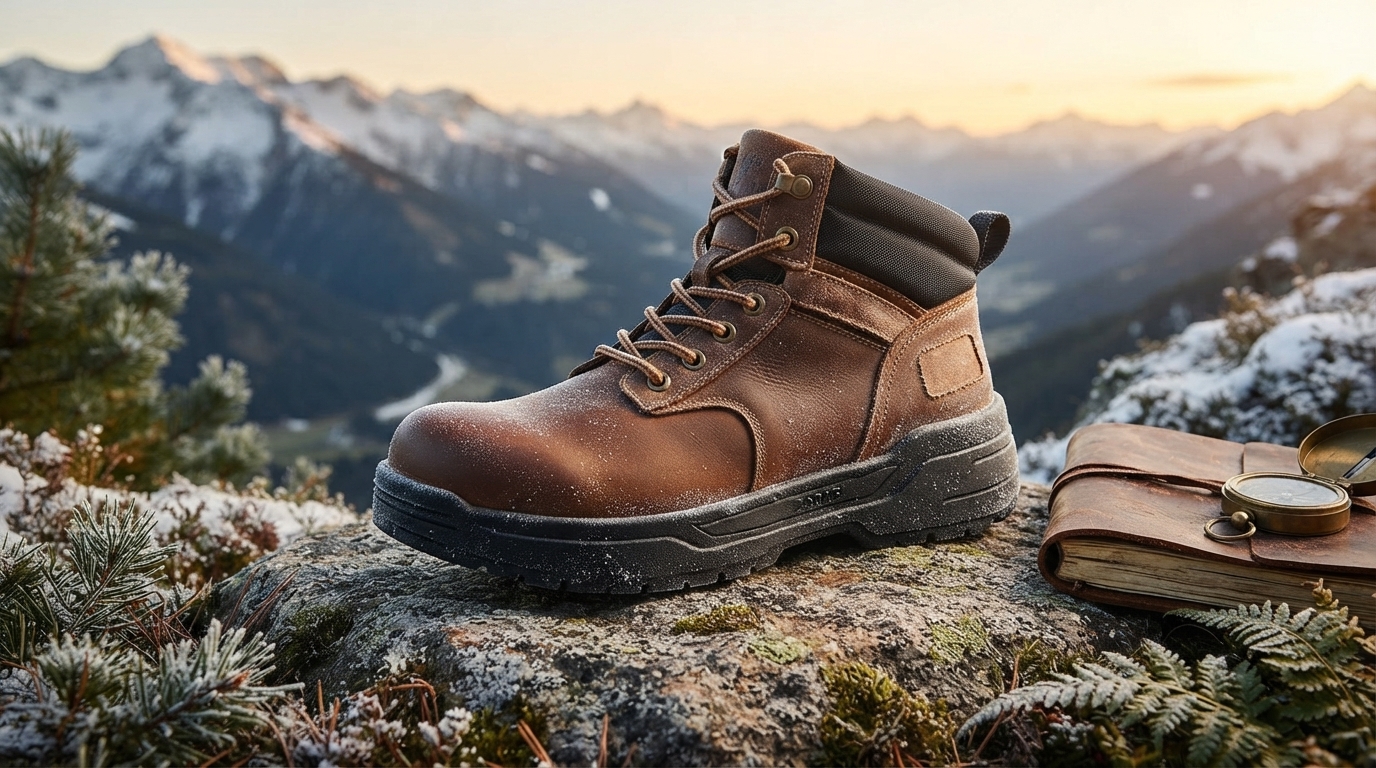
Built for cold, wet days and uneven trails, Golden Camel men’s hiking boots combine a genuine leather upper with a thick, stable sole and a non-slip tread. The retro profile fits right in on outdoor routes, but it also looks at home with everyday winter outfits—making it a practical choice for commutes, travel, and weekend hikes when conditions turn slick.
Winter weather tends to create unpredictable footing: slush at the curb, wet pavement at crosswalks, and packed dirt that turns to mud on shaded paths. A supportive leather boot with a thicker sole can help you feel more planted while still offering enough comfort for longer days on your feet.
If you want a single pair that bridges “trail-ready” and “daily winter wear,” the classic leather build and rugged outsole style make this category of boot a strong fit.
Leather hiking boots stand out for structure and longevity. With a genuine leather upper, these boots are designed to feel supportive around the foot while standing up to repeated wear in wet-season conditions. Leather also tends to become more comfortable over time as it softens and conforms—just plan for a short break-in period before an all-day outing.
| Feature | What to Expect | Why It Matters |
|---|---|---|
| Upper material | Genuine leather | Longer wear life and better structure than many synthetics |
| Water protection | Wet-weather oriented build | Helps keep feet drier in rain, puddles, and slush |
| Outsole | Thick, non-slip tread | More stability and grip on mixed surfaces |
| Style | Retro winter boot look | Works outdoors and for everyday wear |
| Use season | Cold and wet conditions | Better suited to winter walking than lightweight hikers |
A thick sole does more than add height. It can help smooth out harsh ground feel on rocky paths, reduce pressure when you’re on hard surfaces for hours, and provide extra separation from cold pavement. Combined with a non-slip outsole pattern, the goal is steadier contact on wet sidewalks, packed dirt, and light snow.
On true ice, no rubber tread is a guarantee. Shorter steps, slower turns, and careful placement matter just as much as outsole design when conditions are polished and frozen.
Getting the fit right is the difference between a comfortable winter boot and one that rubs. Leather can be forgiving over time, but the first few wears should still feel secure without pinching—especially at the toes and heel.
If blisters tend to be an issue, a good sock system and early hotspot management can make a big difference. The American Academy of Dermatology’s guidance on blister prevention is a helpful reference for staying comfortable on longer walks: How to prevent blisters (AAD).
For a deeper maintenance overview—especially after muddy hikes—REI’s boot-care basics are a solid guide: How to Care for Hiking Boots (REI Co-op).
They’re designed for wet conditions, but “waterproof” performance can still depend on construction details like seams and the height of the tongue gusset. Standing in deep puddles for extended time can overwhelm most boots, so treat them as protective for rain, slush, and shallow water rather than unlimited submersion.
A thick sole can reduce impact on hard ground and improve stability, but it may also add weight and reduce ground feel. For best comfort, break them in with shorter walks first and choose socks that balance warmth with moisture control.
Wipe off salt and slush as soon as possible, then let the boots air-dry at room temperature away from heaters. Once dry, condition the leather to prevent drying and reapply a compatible waterproofing treatment when water stops beading on the surface.




Leave a comment