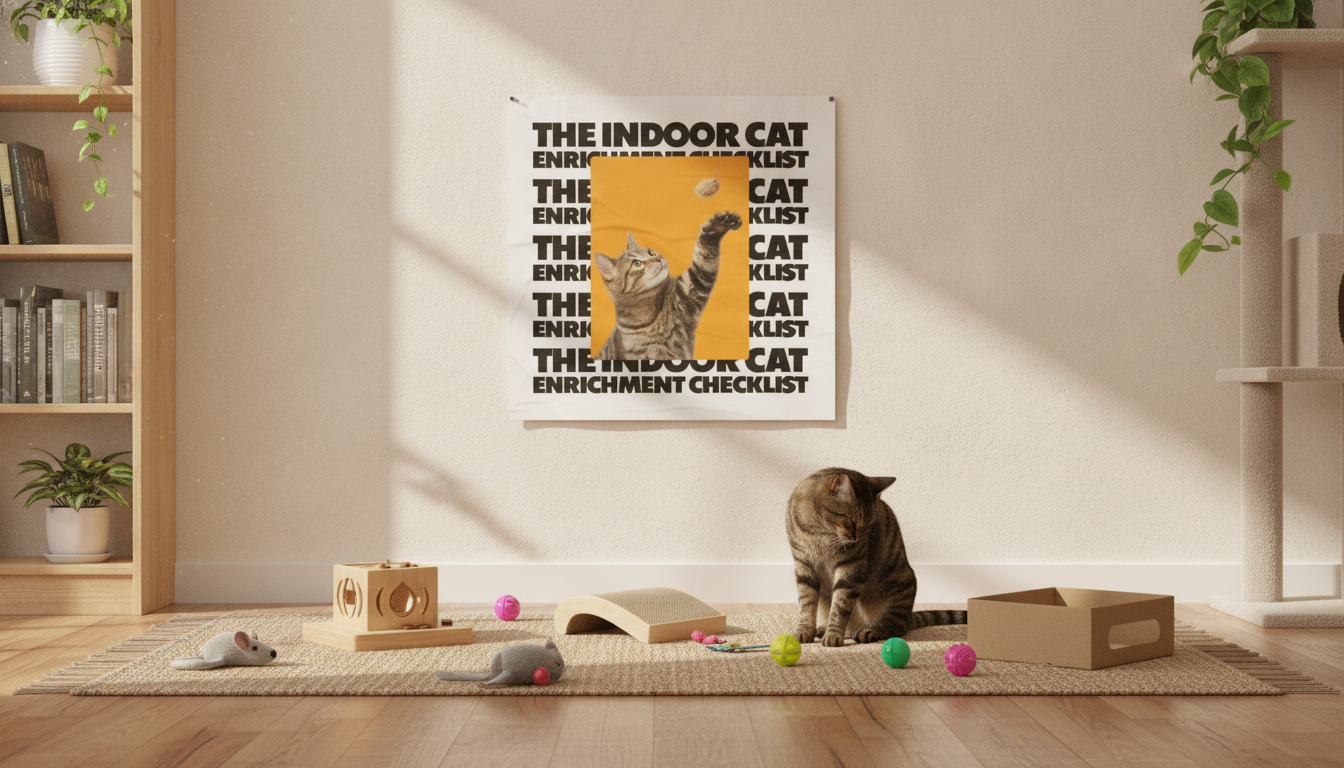
Indoor cats can thrive when their days include variety: chances to hunt, climb, scratch, explore, and rest in comfort. A good enrichment plan supports healthy weight, reduces boredom behaviors, and helps anxious cats feel more secure. Use the checklist below to build a repeatable routine that fits any home, from small apartments to multi-cat households.
These five categories match what feline behavior experts emphasize: cats do best when their environment supports species-typical behaviors. For deeper guidance, see the American Association of Feline Practitioners (AAFP) Feline Environmental Needs Guidelines and International Cat Care’s enrichment overview.
A simple rhythm that often works: play first (to “hunt”), then feed (to “eat”), then let your cat settle (to “groom and sleep”). If you prefer a printable-style routine you can reuse, Indoor Cat Enrichment Checklist is a quick way to keep daily and weekly items consistent.
| Day | Hunt/Play | Food Enrichment | Environment | Calm Time |
|---|---|---|---|---|
| Mon | Wand toy: low-to-ground stalk and pounce | Puzzle feeder (easy) | Move a chair to create a lookout spot | Brush or gentle massage |
| Tue | Ball track or kick toy session | Scatter feeding in two rooms | New cardboard box with cut “windows” | Quiet window perch nap |
| Wed | Hide-and-seek with a toy behind furniture | Lick mat with wet food (thin layer) | Catnip/silvervine on a scratcher (if tolerated) | Treat-free cuddle/settle practice |
| Thu | Short sprint play: “chase, stop, chase” intervals | Puzzle feeder (medium) | Rotate two stored toys back in | Warm blanket in a covered bed |
| Fri | Feather teaser with “catch” ending | Slow feeder bowl | Change perch height or add a step stool | 5-minute clicker training |
| Sat | Obstacle course: hop, climb, tunnel | Treat hunt in paper cups/boxes | Supervised new room exploration | Calm music/quiet time |
| Sun | Free-choice toy buffet (10 minutes) | Puzzle feeder (hard) or DIY foraging | Refresh scratch stations (move one closer to favorite spot) | Long nap zone protected from disturbance |
If you’re adding shelves or perches, stability matters more than height. A wobbly perch can undo confidence quickly—especially for shy cats—so secure mounting and non-slip surfaces are worth the effort.
Training doesn’t need to look like a long session. One minute of “touch the target” before meals, repeated daily, can give your cat a predictable routine and a sense of control. For more general ideas, the ASPCA’s cat enrichment guidance is a helpful reference.
Two quick tools that can make routines easier to maintain are The Indoor Cat Enrichment Checklist: Best Indoor Enrichment for Cats to Keep Them Happy and Stimulated (a ready-to-follow plan) and Calm at Work: Smart Strategies to Manage Stress and Boost Focus if staying consistent is hardest during busy weeks.
Many indoor cats do well with about 10–20 minutes total, split into 2–3 short sessions. Keep it hunt-like (chase, pounce, “catch”), then offer a small snack or meal to complete the sequence.
Safe solo options include a window perch with a view, puzzle feeders or treat scavenger hunts, rotating toys, and plenty of nap spots. Avoid leaving out strings, small parts, or unsecured shelves that could topple.
Go vertical with a tall cat tree or shelves/steps, use multi-purpose items (scratch + perch + lounge), and rotate toys to keep things fresh without adding clutter. A sturdy perch by the brightest window often delivers the biggest daily payoff.






Leave a comment