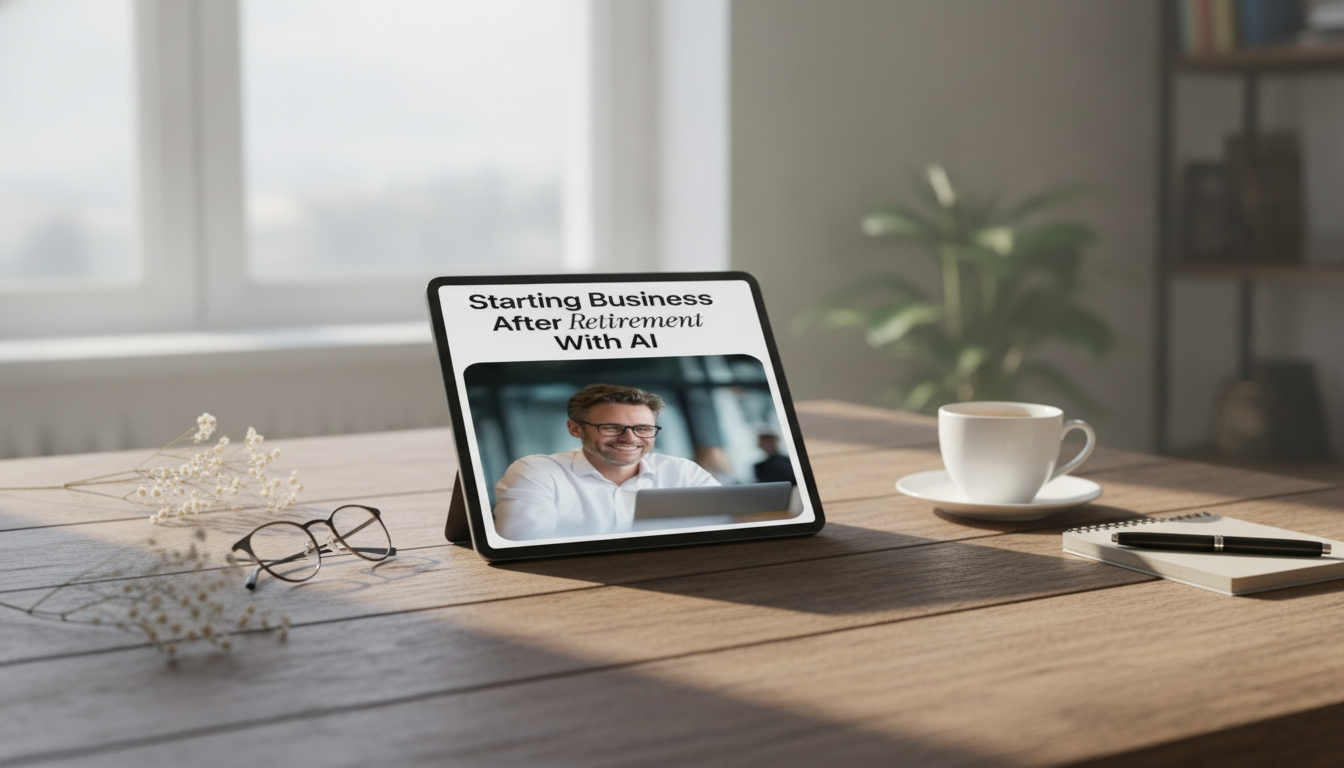
Retirement can be the ideal time to build a small, flexible business that fits your pace and lifestyle. With today’s AI tools, retirees can validate ideas faster, create simple marketing materials, and streamline everyday tasks without needing a technical background. The goal isn’t to build a complicated “tech business”—it’s to use AI like a helpful assistant so you can spend more time doing work you enjoy (and less time wrestling with admin).
Below is a practical, step-by-step approach for choosing a retirement-friendly business direction, testing it without spending much money, and setting up a lightweight weekly routine you can sustain.
Many retiree-run businesses succeed because they’re simple, consistent, and built around real-world experience. AI supports that “small and steady” style by reducing the friction of starting and running a micro-business.
| Goal | AI-assisted approach | Example outcome |
|---|---|---|
| Stay busy without full-time hours | Create a weekly task plan and time blocks | 3–6 hours/week routine with clear next steps |
| Earn supplemental income | Price brainstorming and simple offer packaging | One core service + one add-on option |
| Use existing expertise | Turn past experience into a clear niche statement | Defined audience and problem to solve |
| Keep admin simple | Templates for emails, invoices, and FAQs | Reduced back-and-forth with customers |
The most sustainable retirement businesses start with constraints, not hype. Decide what you want your weeks to feel like, then pick a model that fits.
A helpful test: if you imagine doing the work for 2–3 hours on a Tuesday morning, does it sound pleasant or exhausting? Choose “pleasant,” then design the business around that.
Validation is where AI really shines—because it helps you think clearly and prepare quickly. The key is to treat AI as a research and drafting partner, then confirm what matters in the real world.
For deeper planning basics, the U.S. Small Business Administration business planning guide is a solid reference—especially when you want to formalize an idea without overcomplicating it.
Retirement businesses often grow through trust: referrals, local reputation, and clear communication. Start with one core offer, make it easy to understand, and set boundaries early.
If stress or scattered focus gets in the way of consistent progress, a structured routine can help. Calm at Work: Smart Strategies to Manage Stress and Boost Focus | Digital Guide for Professionals | How to Manage Stress at Work eBook & Checklist is a practical option for creating calmer work blocks and follow-through—useful when you’re building something new without the old workplace structure.
If you want a guided, ready-to-use format to reduce decision fatigue, Starting Business After Retirement With AI – Digital Guide, eBook & Checklist for Retirees Using AI to Launch New Business Ideas organizes the process into prompts, templates, and a checklist you can reuse as your ideas evolve.
For practical consumer protection guidance, the Federal Trade Commission’s scam and fraud resources are worth bookmarking. For tax fundamentals, the IRS Small Business and Self-Employed Tax Center is a reliable starting point.
Yes. Choose a low-tech business model and use AI mainly for drafting, organizing, and creating reusable templates. Start with one channel (like referrals or a simple one-page site) and keep the setup minimal.
Service-based consulting/coaching, digital guides or templates, local appointment services with light admin, and small curation/reselling businesses tend to work well. The best fit is the one that matches your energy level, weekly hours, and preferences for working with people.
Use AI as a first-draft assistant for clarifying ideas, building checklists, and writing communication templates, then apply your experience to refine what’s realistic. Verify facts, keep the human touch in customer conversations, and rely on real-world feedback to improve the offer.






Leave a comment