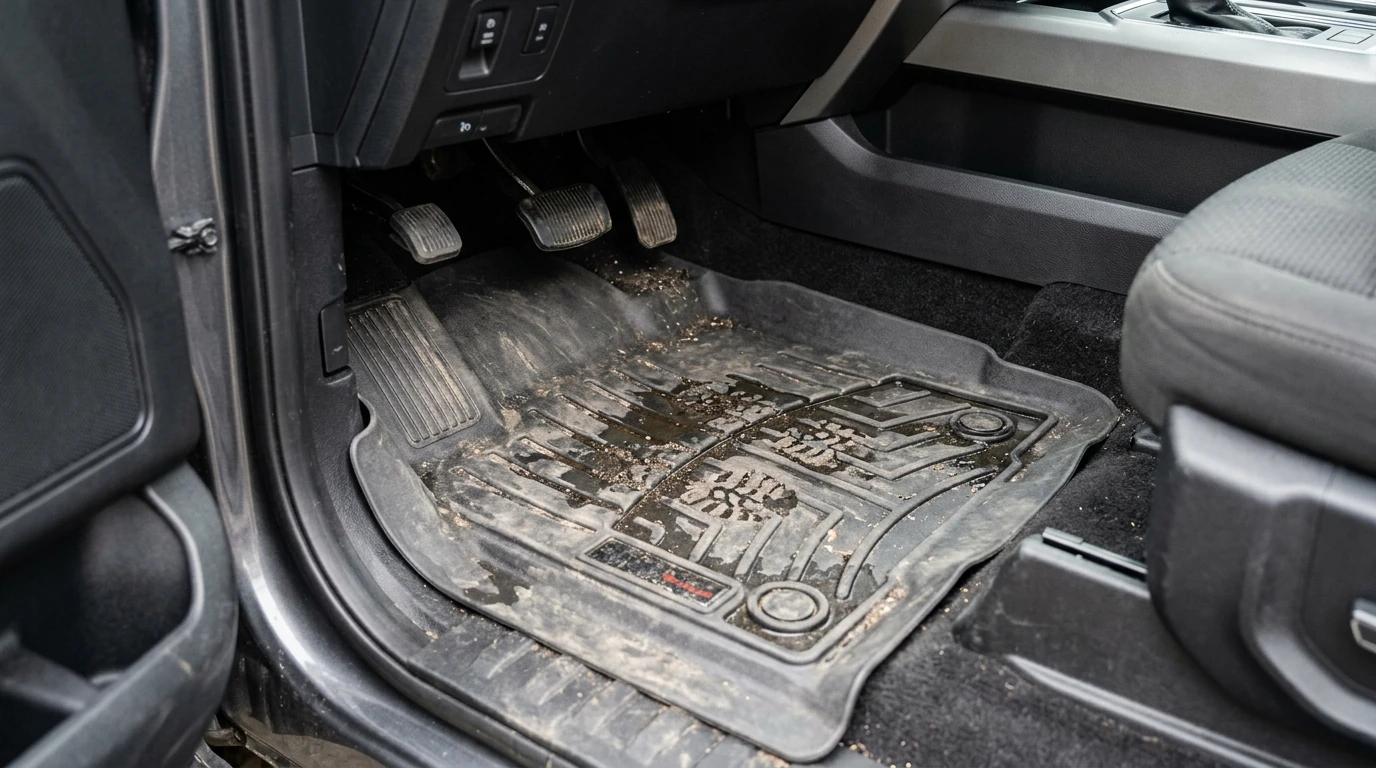
Road grit, wet shoes, spilled drinks, and daily dust all land in the same place: the floor. Heavy-duty all-weather mats are a simple upgrade that keeps cleanup fast and helps preserve carpet and resale value—without turning every rainy day into a detailing project. Our team recommends focusing on three things: containment (a raised lip that holds liquid), stability (so the mat won’t creep underfoot), and safe fit (so nothing interferes with pedals).
Real driving brings real mess. All-weather mats are designed for the kind of debris and moisture that quickly embeds into carpet fibers if you leave the floor unprotected.
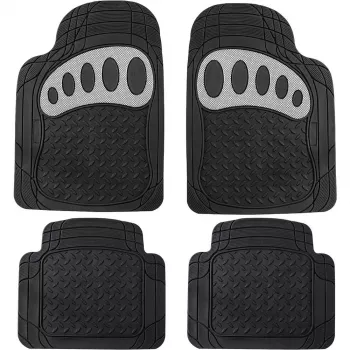
If you want a simple, durable starting point, our team keeps Universal Heavy-Duty All-Weather Car Floor Mats in stock for drivers who need practical protection without a custom-fit shopping rabbit hole.
Universal mats can work extremely well when you take a minute to confirm fit and safety. The goal is full coverage where your feet land, while keeping the mat flat and securely positioned.
| Check | Why it matters | What to confirm before driving |
|---|---|---|
| Pedal clearance | Prevents binding and unsafe operation | Mat does not touch accelerator/brake through full pedal travel |
| Flat placement | Improves grip and keeps edges from folding | Corners lie flat; no buckling near seat rails |
| Retention/traction | Helps stop shifting underfoot | Mat stays put during entry/exit and hard braking |
| Edge height | Keeps liquids contained | Raised lip is intact and not crushed under the seat track |
For additional safety guidance, the NHTSA’s floor mat safety recommendations are worth a quick read: https://www.nhtsa.gov/equipment/car-seats-and-booster-seats/floor-mat-safety.
Heavy-duty all-weather mats earn their keep because the mess stays on the mat—so you’re not constantly chasing grit into carpet seams or dealing with odors after a wet week.
If you prep seasonally, AAA’s winter driving and vehicle prep tips are a solid reference point: https://www.aaa.com/autorepair/articles/winter-driving-tips.
Once the mats are in, a quick routine keeps them performing the way you bought them to—contained mess, stable footing, and no lingering moisture.
| Condition | What to do | How often |
|---|---|---|
| Light dust | Shake out and wipe down | Weekly or as needed |
| Mud/salt/slush | Rinse thoroughly and brush channels | After storms or beach trips |
| Spills | Remove, wash with mild soap, dry completely | Immediately |
If you’re refreshing the look of worn trim, our team keeps Car Plastic & Leather Restorer – Back to Black Gloss Coating & Polish in stock as an easy add-on for quick touch-ups. Use products intended for automotive surfaces and follow label directions for best results.
If you’re building a simple “ready for anything” kit for the car, pairing floor protection with backup power can also be helpful. We also stock the Portable 200W Solar Generator with AC Outlet & USB Ports for charging essentials on the go.
Universal mats are designed to fit many vehicles, but footwell shapes vary. You’ll get the best result by measuring your footwell area, confirming full pedal clearance, and making sure the mat lies flat and can be secured.
They typically rely on traction features such as anti-slip backing and surface texture, and some vehicles also provide factory retention hooks. After installation, confirm the mat doesn’t shift during entry/exit or braking, and never stack mats on top of each other.
Remove the mats, knock off dry debris first, then rinse thoroughly and brush out the channels where slush and grit settle. Use mild soap if needed and let the mats dry completely before reinstalling.





Leave a comment