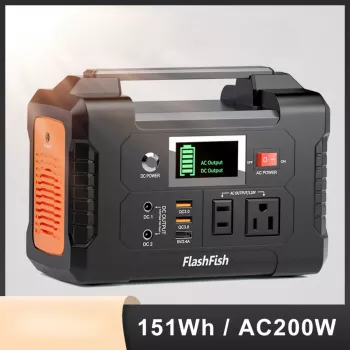
It depends on two numbers that often get mixed up: the generator’s output rating (watts) and its battery capacity (watt-hours). “3000 watt” usually describes how much power it can deliver at once, not how long it will last. Runtime is mainly determined by battery watt-hours (Wh) and the size of the load you’re powering.
A quick estimate is: Runtime (hours) ≈ Battery capacity (Wh) ÷ Device load (W), then subtract about 10–20% for inverter and system losses if you’re using AC outlets.
Many “3000W” solar generators fall in the ballpark of 2,000–3,600Wh of battery capacity (always verify the Wh on the spec label). Using that range, here’s what you can expect:
• 100W load (router + lights): about 16–32 hours
• 300W load (TV + fan or small appliances): about 5–10 hours
• 600W load (microwave use spread out, cooking, tools): about 2.5–5 hours
• 1500W load (space heater on low/high varies): about 1–2 hours
• Near 3000W continuous: often well under 1 hour, and some units may limit continuous output even if they advertise 3000W peak
Battery size (Wh): the biggest factor. Two units both labeled “3000W” can have very different runtimes.
AC vs. DC: powering USB/12V devices is usually more efficient than running AC loads through an inverter.
Surge power: fridges, pumps, and power tools may start fine (high surge) but still drain the battery based on their running watts over time.
Solar input: if panels are connected in good sun, you can extend runtime or even run loads indefinitely when input matches output.
For a deeper primer on portable solar generator basics and how to size a setup, see this portable solar generator guide.
Match the panel wattage to the generator’s maximum solar input, then scale up based on how fast you need to recharge. As a rough guide, a 2000Wh battery often needs several hundred watts of panels to refill in a single sunny day.




Leave a comment