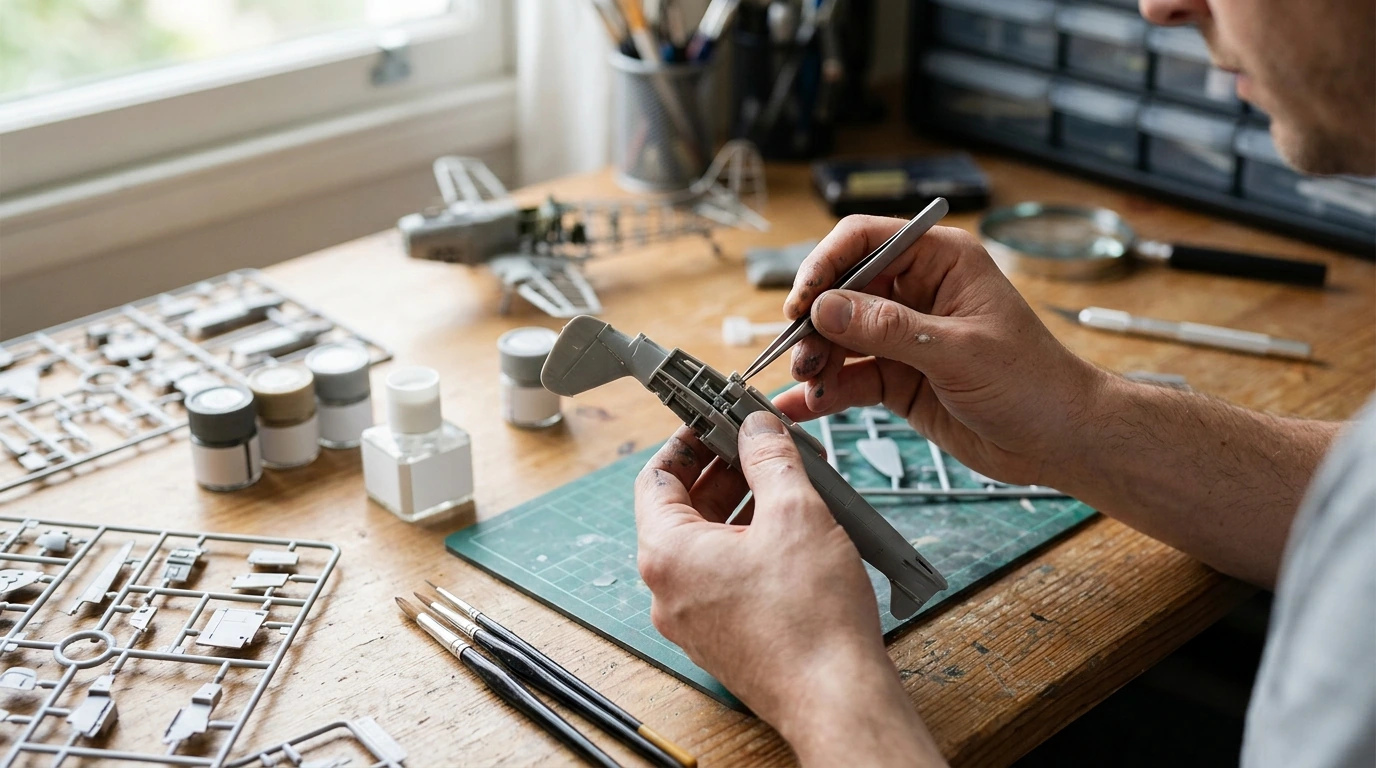
The hobby of building models is most commonly called scale modeling or simply model building. Depending on what you’re making, you may also hear more specific names like plastic modeling (often kits), model making (a broader term that can include scratch-building), or miniature modeling (small-scale figures, dioramas, and terrain).
In scale modeling, the goal is usually to recreate a real subject—like a car, aircraft, ship, train, military vehicle, or architectural structure—at a reduced, proportional size (such as 1/24, 1/48, or 1/350). Some builders focus on realism and historical accuracy; others lean into creative customization with alternate paint schemes, weathering, or fictional builds.
Model kit building typically starts with a pre-made kit (plastic, resin, wood, or metal) that’s assembled, sanded, filled, primed, and painted. Scratch-building means creating parts from raw materials like styrene sheet, wood, wire, or 3D-printed components. RC modeling adds functioning electronics and movement, while diorama building combines models with scenery for a “slice of life” display.
Even when the hobby starts with a kit, the craft quickly becomes hands-on: cleaning up parts, test-fitting, refining seams, applying decals, painting layers, and finishing with weathering or clear coats. Many modelers also customize details—swapping parts, adding photo-etched pieces, or making small modifications to match a particular version of the subject.
For a step-by-step look at how a custom build comes together from planning through final finish, see this guide: custom model building workflow (plan, detail, finish).
For Scale Modeling: What Model Building Is Really Called, the best answer depends on fit, material, care instructions, and how the product will be used day to day.
A basic starter setup includes a hobby knife, sprue cutters, sanding sticks, plastic cement, and a few brushes or an entry-level airbrush. Add primer, a couple of paints, and masking tape to handle most beginner builds.





Leave a comment