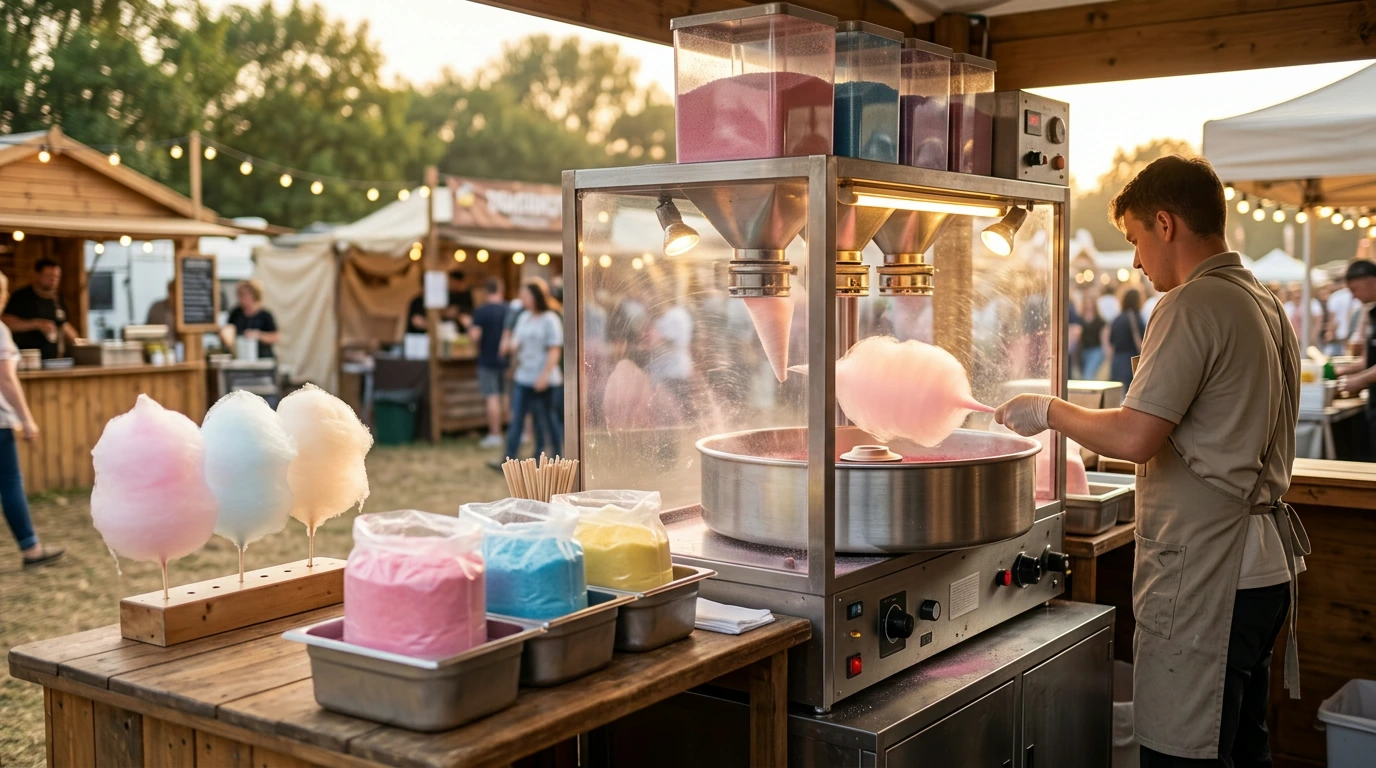
The cost of an automatic cotton candy machine usually falls into three practical tiers: entry-level countertop units, mid-range machines designed for frequent use, and commercial-grade models built for events and nonstop operation. In most cases, you can expect to spend anywhere from about $50 to $2,000+, depending on output, materials, and automation features.
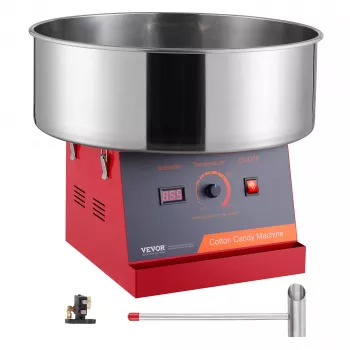
These are compact, home-focused machines with simple controls and smaller bowls. They’re best for occasional use and smaller batches, and they typically come with basic accessories like a scoop or measuring spoon.
This range often adds a sturdier base, a larger stainless-steel bowl, improved heat stability, and higher production speed. If you want a machine for frequent parties, school events, or a small concession setup, our team often sees this tier as the sweet spot for performance per dollar.
These machines are made for high-volume production and longer run times. Expect heavier-duty motors, better thermal consistency, larger bowls, stronger housings, and easier serviceability. Some models also include enhanced safety features and controls that help maintain consistent floss texture during busy periods.
Price is mainly driven by bowl size and material (stainless steel tends to cost more but lasts longer), motor strength, heating stability, and how easily the machine can be cleaned between flavors. Accessories also matter: a reliable sugar scoop, replacement belts, and extra floss cones can reduce day-to-day friction and long-term costs.
If you’re comparing builds and accessories, our stainless-steel bowl and sugar-scoop guide can help you narrow down what’s worth paying for: https://exelline.com/guide-electric-cotton-candy-maker-stainless-steel-bowl-sugar-scoop-guide/
Beyond the machine, set aside a small ongoing budget for floss sugar, cones, and cleaning supplies. If you’ll serve crowds, higher output usually pays back in shorter wait times and less strain on the machine.
Match the machine’s output and bowl size to your crowd: small countertop units fit family parties, while larger stainless-bowl machines handle steady lines at school or community events. If you expect continuous serving, prioritize heat stability and a sturdier motor.



Leave a comment