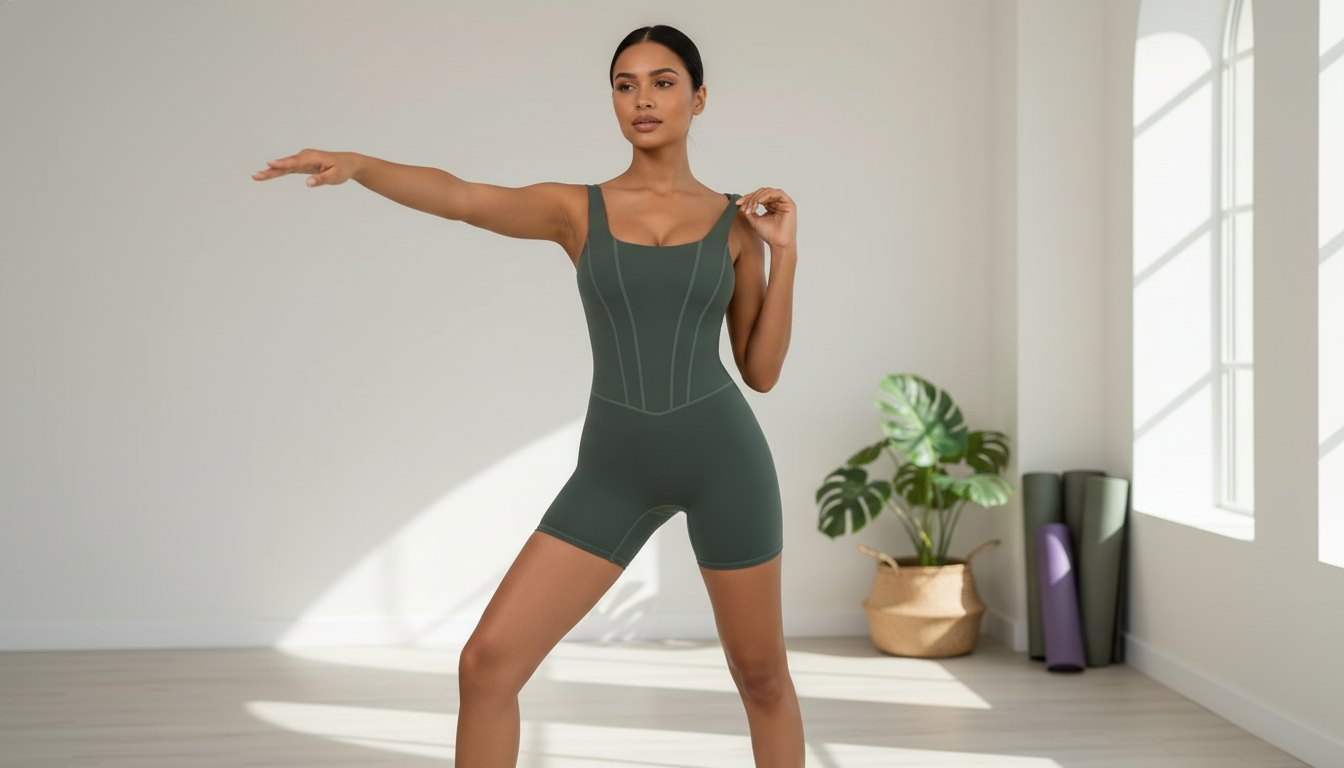
A one-piece yoga jumpsuit can simplify getting dressed for training while delivering a secure, sculpted feel. This style focuses on sweat-wicking comfort, adjustable straps for a customized fit, and a push-up silhouette that supports confident movement from warmups to cooldowns. If you’ve ever dealt with waistbands rolling, tops shifting in downward dog, or a set that just doesn’t feel “locked in,” a streamlined jumpsuit can be a smart upgrade for studio days and beyond.
Quick-dry activewear matters most when your session gets humid—think heated classes, long holds, or fast vinyasa transitions. Organizations like the American Council on Exercise (ACE) frequently highlight how heat and sweat can affect comfort during workouts; fabric that moves moisture can make training feel less distracting.
Fit is where a jumpsuit either becomes your go-to uniform—or the piece you avoid. Adjustable straps are the practical advantage: they allow you to fine-tune lift and coverage without relying on constant tugging mid-class. A push-up cut typically focuses shaping around the bust and upper torso, aiming for a contoured look that still feels stable while you move.
| Check | What to look for | If it’s off, adjust this |
|---|---|---|
| Straps | Secure without pulling the neckline down | Shorten or lengthen straps; re-center the front |
| Bust support | No gaping; comfortable pressure under bust | Tighten straps; choose a firmer size if between sizes |
| Torso length | No riding up; no excess fabric bunching | Adjust straps; consider sizing for torso comfort |
| Hip/seat coverage | Smooth coverage without sheerness | Size up if fabric strains across seat |
| Movement test | Full squat and overhead reach feel unrestricted | Loosen straps slightly; reassess size |
A good jumpsuit should disappear once class starts—no constant adjusting, no fabric biting when you twist, and no slipping when you invert. The one-piece design helps keep your midsection smooth through transitions, especially when you’re moving from plank to chaturanga to cobra.
If you’re prone to sweat-related irritation, skin-friendly habits help too: showering after a session, changing out of damp clothes promptly, and choosing breathable pieces can support comfort, as noted by the American Academy of Dermatology (AAD).
Quick-dry materials are designed to move moisture away from your skin and dry faster between sets, commutes, and errands. To keep that performance consistent over time, care matters as much as the fabric itself—especially for pieces with straps and shaping seams.
Care labels are there for a reason, and the Federal Trade Commission (FTC) provides guidance around textile care labeling—worth a quick glance before tossing performance wear into a hot cycle.
For days when stress is running high (work, travel, or just a packed calendar), pairing movement with simple routines can help you stay consistent. The digital guide Calm at Work: Smart Strategies to Manage Stress and Boost Focus is an easy add-on for building supportive habits around training and recovery.
If you’re ready for a streamlined set that doesn’t require matching tops and bottoms, shop the Women’s Quick-Dry Yoga Jumpsuit with Adjustable Straps and Push-Up Fit and use the fit table above to dial in your straps before your first session.
Yes—adjustable straps can help fine-tune torso length and coverage so the suit doesn’t feel like it’s pulling upward. Test comfort with a squat and an overhead reach to confirm there’s no riding up or neckline shifting.
It can be comfortable when the straps and underbust area are adjusted correctly for stable support. Check for gaping, pinching, or bounce during movement and tweak strap length (or size) until it feels secure.
Wash cold on a gentle cycle, skip fabric softener, and air-dry when possible to protect moisture-wicking performance. A mesh bag helps protect straps, and a thorough rinse after sweaty sessions can reduce residue and odor over time.






Leave a comment