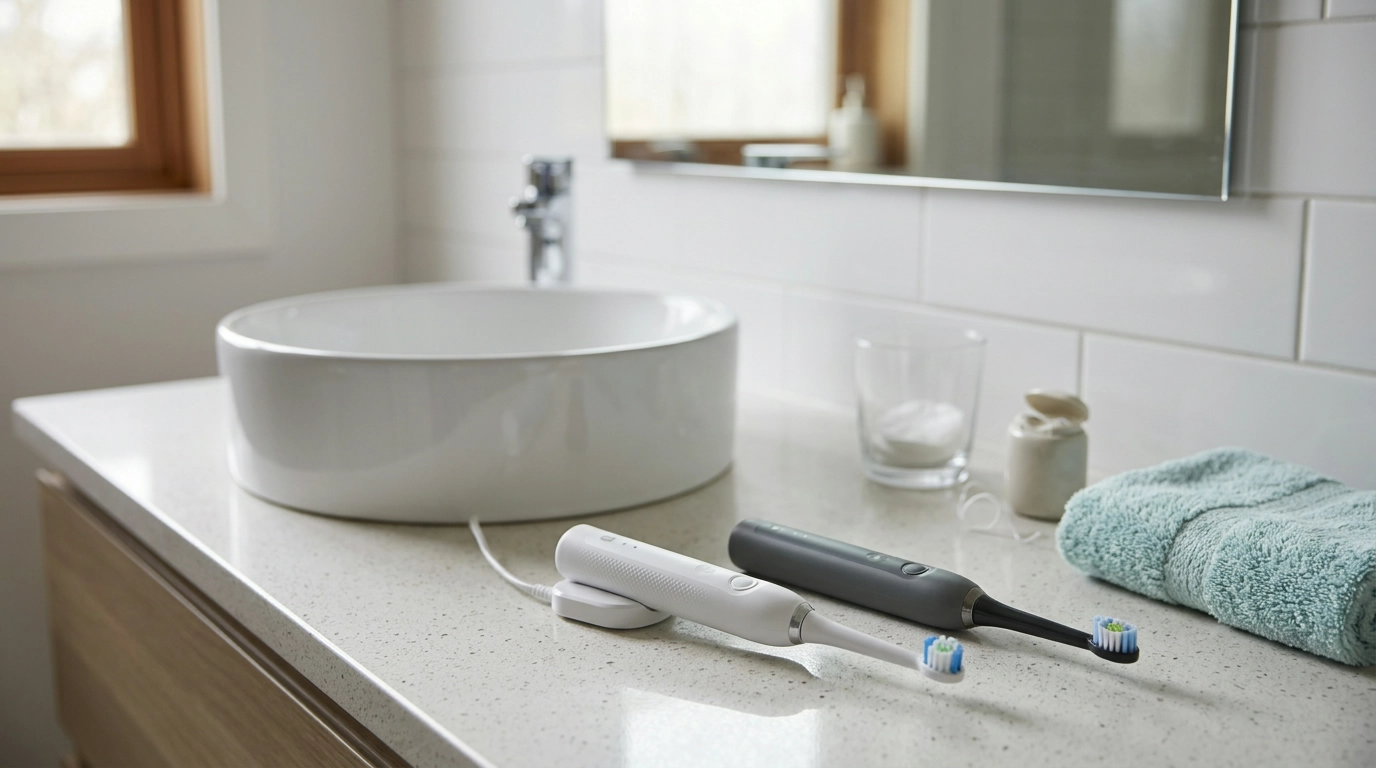
The best electric toothbrush for whitening is one that helps you brush thoroughly and consistently without being harsh on your teeth or gums. Look for soft bristles, a comfortable grip, and settings that let you choose a gentler clean when your mouth feels sensitive. Whitening toothpaste and regular brushing can help reduce surface stains, but a toothbrush does not change the natural color of teeth.
Multiple brushing modes can make a toothbrush more flexible for everyday care. A whitening mode may support focused cleaning, while a sensitive setting can be useful if stronger brushing feels uncomfortable. Modes are not a substitute for gentle technique: guide the brush along each tooth and the gumline rather than pressing hard or scrubbing back and forth.
Charging convenience matters, too. A rechargeable Type-C model can be a practical choice if you prefer a common charging connection. Our five-mode, Type-C electric toothbrush is one option to consider for a routine that includes whitening-focused brushing. Read our guide to the five-mode Type-C electric toothbrush for more product details.
Brush twice a day for two minutes, using a soft-bristled brush and fluoride toothpaste. Move slowly across the front, back, and chewing surfaces of each tooth. Replace the brush head when the bristles become frayed, since worn bristles may clean less effectively. Floss or clean between your teeth daily as well; brushing alone does not reach every surface.
Keep expectations realistic. Brushing can help remove plaque and some stains from foods and drinks, but it will not reliably whiten discoloration beneath the enamel or alter restorations such as crowns and fillings. If stains persist, your teeth are sensitive, or you want a more noticeable color change, ask a dental professional which whitening approach is appropriate for you.
Replace the brush head about every three months, or sooner if the bristles are frayed. If you have been ill, ask your dental professional whether you should replace it earlier.




Leave a comment