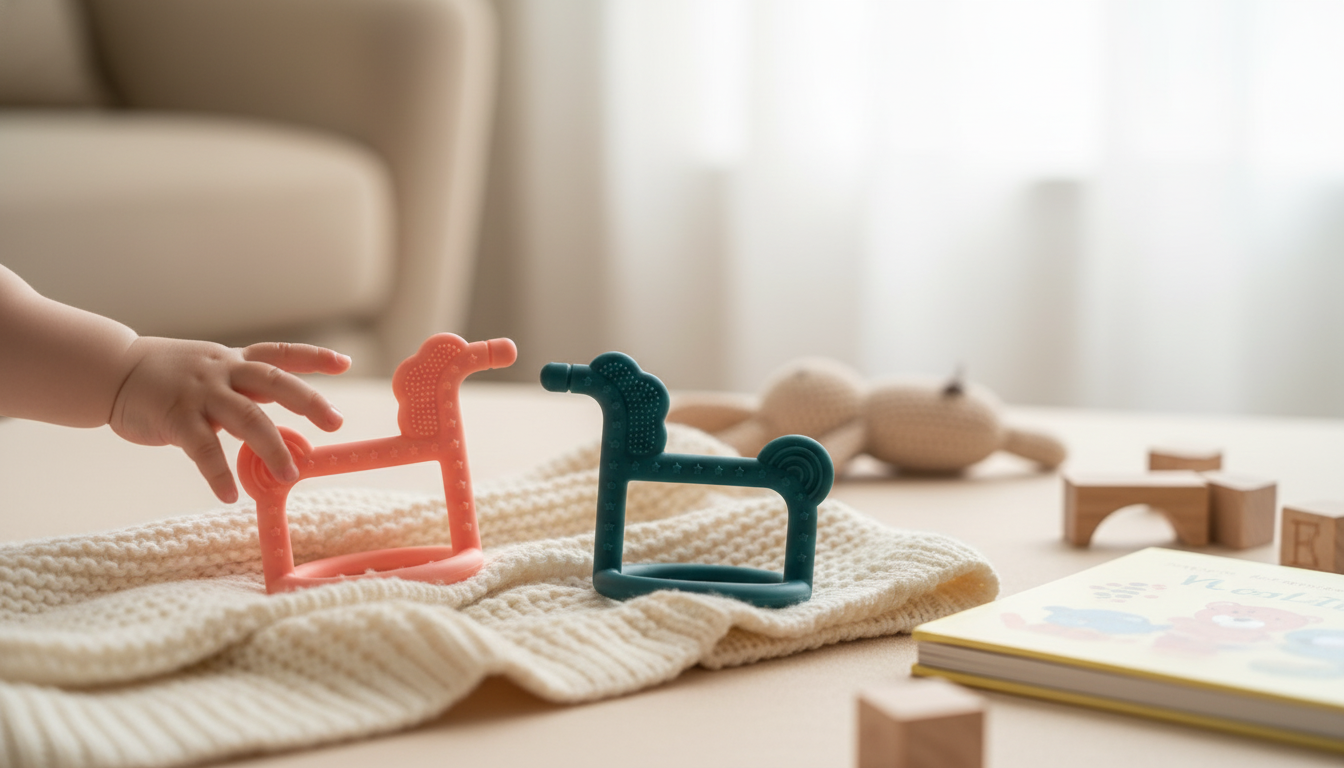
Pediatricians should recommend simple, age-appropriate teething toys that are easy for babies to grip, made from suitable materials, and free of small parts that could come loose. In a clinical setting, a teether may help demonstrate safe soothing options to caregivers; at home, an adult should supervise whenever a baby uses one.
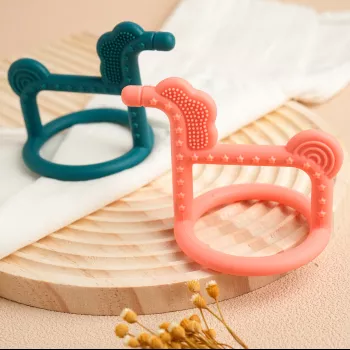
Choose a teether that is lightweight, easy for little hands to hold, and sized so it cannot be swallowed. A simple, one-piece design is preferable to toys with detachable decorations, beads, cords, batteries, or other small components. Gentle ridges or varied textures can give babies different surfaces to mouth without requiring a complicated design.
A BPA-free silicone teether can be a practical choice when its design is intended for infant use and it has no damaged or detachable parts. Our guide to a BPA-free baby silicone cartoon teether offers one example of this style. The best choice is the one your baby can hold comfortably and that caregivers can keep clean and inspect easily.
Follow the product’s care instructions, and clean the teether before use and whenever it becomes soiled. Inspect it regularly; stop using it if you notice tears, cracks, loose pieces, or other damage. Do not freeze a teether solid unless its instructions specifically allow it, since an overly hard surface may be uncomfortable for a baby’s gums. If teething symptoms seem unusual or concerning, caregivers should contact their pediatrician rather than relying on a toy for relief.
Use the cleaning method provided with the teether, since care instructions can vary. Let it dry as directed, and inspect it for damage before giving it back to your baby.

Leave a comment